The Co-Witness Trap: Why Tall Suppressor-Height Sights Can Work Against Pistol Red-Dot Performance
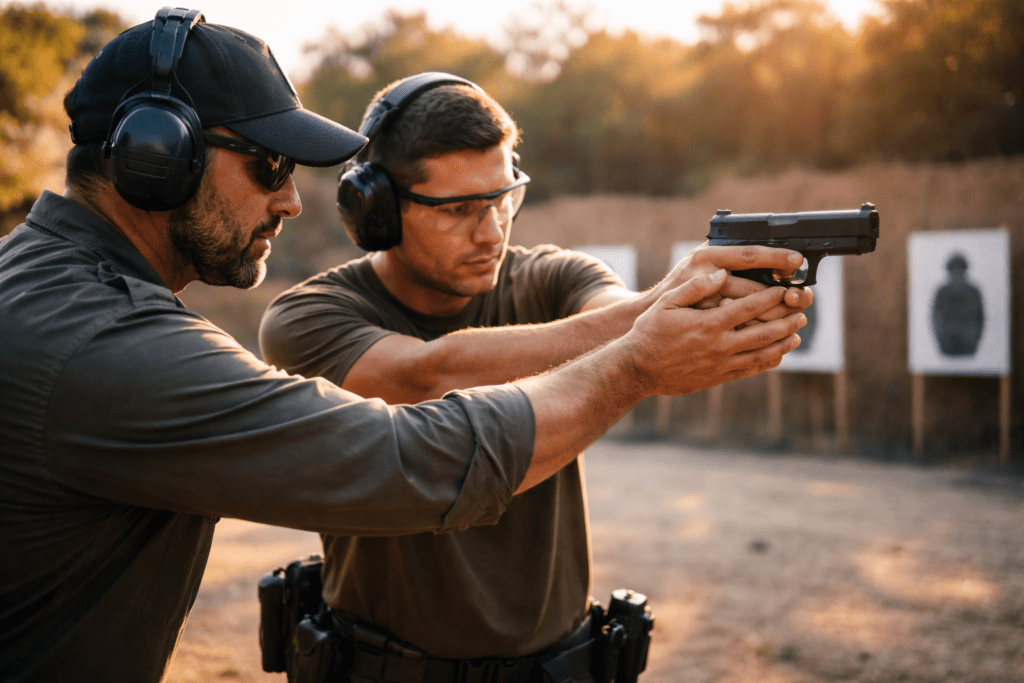
The hard truth: a pistol red dot is not supposed to be used like iron sights with a glowing dot floating above them. The entire advantage of the red-dot pistol system is that the shooter can stay threat-focused, process more information, and let the dot appear in the visual plane without forcing a traditional front-sight focal shift. Aimpoint describes the red-dot concept exactly that way: both eyes open, target focus, no need to center the dot in the window, and no need to align front sight, rear sight, and target the way iron sights require. (Aimpoint)
Suppressor-height sights were originally a practical solution for a specific mechanical problem: seeing over a suppressor or creating backup iron visibility through an optic window. That does not mean they are automatically the best sighting solution for every pistol-mounted optic. The moment the iron sights become tall enough to dominate the optic window, they stop being backup sights and start becoming visual competition.
The Core Problem
Traditional iron-sight doctrine teaches the shooter to align the front sight and rear sight, place them on the target, and focus on the front sight while the target becomes blurry. That is useful for traditional iron-sight marksmanship, but it is the opposite visual priority of a modern pistol red dot. The uploaded firearms training material reflects the traditional iron-sight model clearly: sight picture requires front sight, rear sight, target relationship, and front-sight focus.
A red dot changes that visual task. The shooter should be looking at the threat or target area, not hunting for a front sight. The dot is a confirmation index inside the line of sight. It should not force the shooter back into the old “front sight, rear sight, target” visual loop.
That is where tall suppressor-height sights create a training problem.
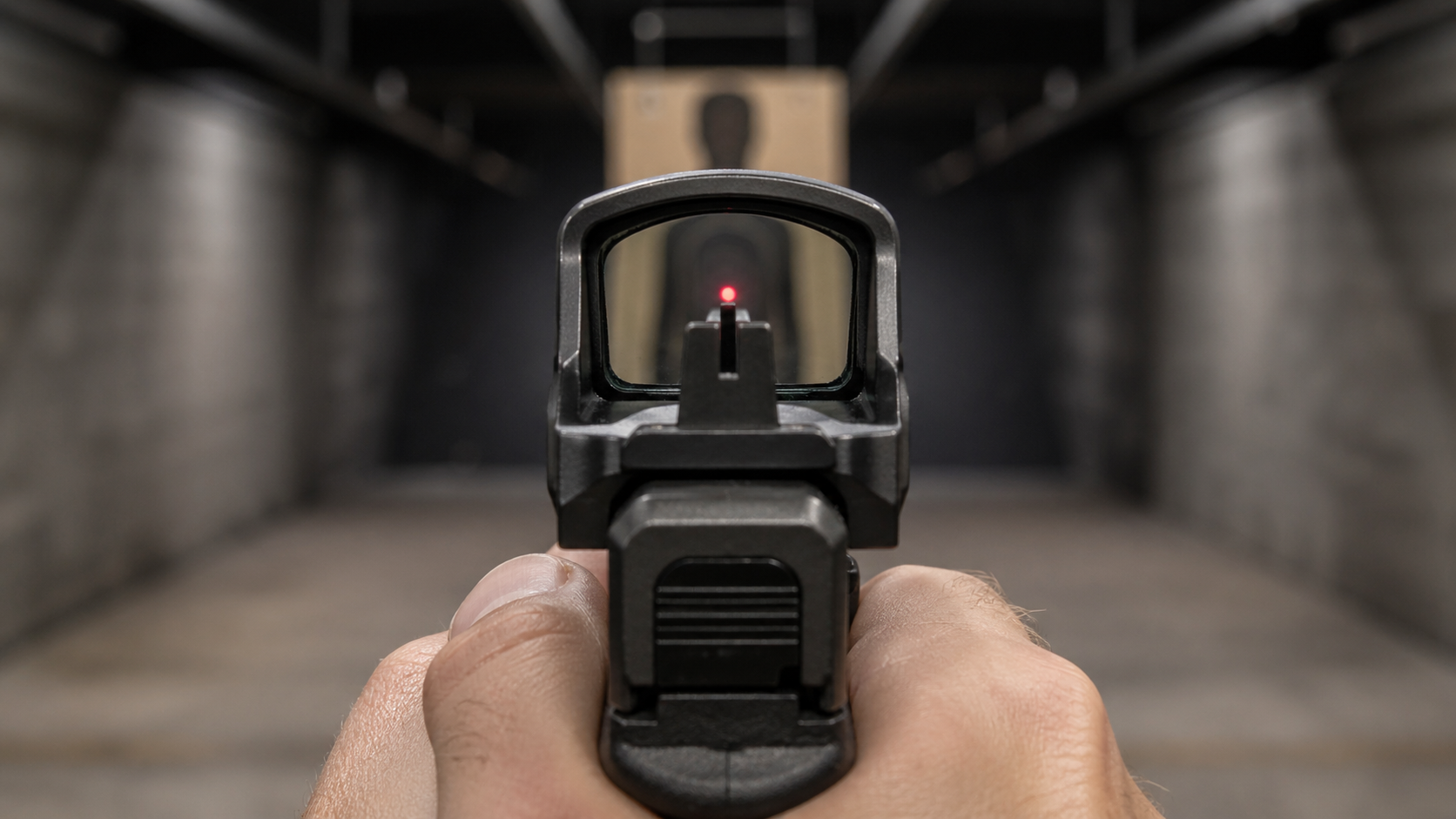
When the shooter presents the pistol under time pressure and stress, a tall front sight sitting high in the optic window can steal attention before the dot does. The shooter starts looking at the sight, not through the optic and not at the threat. The red dot becomes the secondary object. The front sight becomes the visual anchor. That is not red-dot shooting. That is iron-sight shooting with an electronic device in the way.
Why This Happens: The Science of Visual Attention
Human vision is not a camera. We do not process the entire visual field with equal clarity. Central vision is what we see directly in front of us, while peripheral vision provides broader awareness but less detail. The fovea is the part of the eye responsible for the sharpest vision, and peripheral vision is useful for movement, shape, and field awareness, but not the same level of detailed discrimination. (Cleveland Clinic)
That matters because shooting under pressure is a visual-attention problem before it is a trigger-control problem. The brain selects what matters. Under stress, it often selects the most familiar, high-contrast, task-associated object. If the shooter has years of front-sight conditioning and now places a tall, black front sight directly in the red-dot window, the brain has been handed a distraction disguised as a backup system.
Research on inattentional blindness shows that people can miss even salient objects when their attention is loaded by another task. In other words, people can be “looking” and still fail to perceive what matters because attention is limited and task-directed. (search.bwh.harvard.edu)
In lethal-force research, officers reported major perceptual distortions during shootings, including tunnel vision, heightened visual detail, and time distortion. NIJ’s summary of Klinger and Brunson’s study reported tunnel vision in 51% of cases and heightened visual detail in 56% of cases, supporting the point that stress changes what the shooter perceives and prioritizes. (National Institute of Justice)
The conclusion is blunt: in a fight, your vision will not politely process the dot, irons, target, hands, background, lighting, movement, and threat cues equally. It will lock onto what your training and equipment make visually dominant.
The Co-Witness Myth
Co-witnessing means the iron sights are visible through the optic and can be used with the red dot system. On a pistol, achieving that usually requires taller sights because standard-height pistol irons often sit too low below the optic body. XS Sights explains that pistol red-dot co-witness normally requires sights taller than normal, and also acknowledges the downside: the optic view can become busy or cluttered, limiting field of view. (XS Sights)
That is the part many shooters ignore.
They hear “backup sights” and assume “taller is safer.”
That is not always true.
A backup system should be available when needed. It should not visually dominate the primary system every time the gun is presented. Absolute co-witness may sound mechanically ideal, but on a pistol red dot it can create the most contaminated sight picture. Primary Arms correctly notes that “absolute” and “lower 1/3” co-witness concepts are more naturally rifle concepts and are not always cleanly achievable on pistols; pistol setups often end up with no co-witness, lower-quarter-style visibility, or a compromised relationship depending on optic height, slide cut, plates, and sight height. (Primary Arms)
The better question is not: “Can I co-witness?”
The better question is: “Does this sight height help the dot do its job, or does it drag me back into iron-sight behavior?”
Window Occlusion: The Problem Nobody Wants to Admit
A pistol red-dot window is already small. When tall suppressor-height sights rise into that window, they physically block part of the visual scene. This is not theory. It is geometry.
The front sight, rear sight, and optic body create layers of visual obstruction. If the sights are tall enough, the lower portion of the optic window becomes a black mechanical wall. That can interfere with seeing the lower body line, hands, waistband, weapon cues, movement, or the ground-level context around the threat.
That matters because threat assessment is not only about center mass. Hands kill. Waistbands matter. Movement matters. Background matters. Unknown objects matter. A pistol optic should help the shooter see more, process faster, and confirm alignment with less visual noise. Tall sights that crowd the window do the opposite.
XS Sights makes the same basic point from the equipment side: co-witnessing can clutter the optic view and limit field of view, and if the optic sight line is obscured by fog, mud, damaged glass, or other obstruction, the irons may not solve the problem anyway. (XS Sights)
One-liner version:
If your backup sights block the visual information you need to make the decision, they are not helping you survive the decision.
Why “Using the Irons to Find the Dot” Is a Training Crutch
Many shooters are told to use suppressor-height sights to “find the dot.” That can help a new red-dot shooter during early transition, but it becomes a crutch if it remains the primary method.
The dot should be found through presentation, grip index, wrist alignment, visual target focus, and repeatable gun path. The uploaded Valortec advanced pistol material emphasizes neurological and biomechanical progression, visual discipline, threat-focus application, target processing, and subconscious performance under stress. That is exactly the right model: build the body and visual system to present the pistol consistently so the dot arrives where the eyes are already looking.
The target-engagement evaluation material also reinforces the importance of leading with the eyes and avoiding unnecessary visual “yo-yo” behavior with iron sights. That is directly relevant here: tall co-witness sights can reintroduce the very focal shifting that a red dot is supposed to reduce.
A shooter who needs the front sight every time to find the dot does not have a red-dot problem. They have a presentation problem.
The Better Standard
The best pistol red-dot setup should follow this hierarchy:
Primary visual task: threat or target focus.
Primary aiming confirmation: red dot.
Backup system: irons, available but not visually dominant.
Emergency fallback: use irons only when the optic fails, is occluded, or the dot is unavailable.
That means suppressor-height sights should not be treated as mandatory. They should be treated as a specific tool for a specific mission requirement.
A better default for many defensive red-dot pistols is:
Use the lowest practical backup irons that remain visible enough to confirm emergency alignment without cluttering the window.
That may mean standard-height sights with an ultra-low optic system, lower-profile optic-compatible sights, blacked-out irons, a subdued rear sight, or a lower-window backup presentation instead of a high absolute co-witness. Aimpoint’s COA/A-CUT pistol system is a strong example of where the industry is going: a lower optic interface that can co-witness with factory iron sights while preserving a cleaner red-dot shooting experience. Aimpoint also states that pistol red dots remove the need to align iron sights and keep the shooter focused on the threat under pressure. (Aimpoint)
Demystifying the Claims
Claim 1: “Suppressor-height sights are required for pistol red dots.”
Not always. They may be required on some optic/slide/plate combinations, especially when the optic sits high. But they are not universally required. Some modern systems are designed to sit low enough to work with standard or lower-profile irons. (Aimpoint)
Claim 2: “Absolute co-witness is best.”
Not for most pistol-red-dot performance. Absolute co-witness often creates the busiest sight picture. It places the old sighting system directly where the dot should be visually dominant. For a defensive pistol, that can encourage front-sight fixation and reduce the clean visual advantage of the optic.
Claim 3: “Tall irons help you find the dot faster.”
They may help during early transition, but they can also prevent the shooter from building a proper red-dot index. If every draw becomes “find front sight, then find dot,” the shooter has not modernized the visual process. They have added steps.
Claim 4: “More visible backup sights equal more safety.”
Only if they do not compromise the primary sighting system. A backup system that constantly competes for attention is not passive redundancy. It is visual interference.
Claim 5: “The dot must sit on top of the front sight.”
No. A properly zeroed dot is the aiming reference. The iron sights and dot should be zeroed and understood as separate systems. The dot does not need the front sight to validate every shot. Aimpoint’s explanation of red-dot use specifically notes that the dot does not need to be centered in the window once the optic is zeroed. (Aimpoint)
Final Position
Suppressor-height sights are not bad. Misusing them is bad.
Co-witness is not a religion. It is an emergency redundancy concept. On a pistol-mounted red dot, the goal should not be to build a giant iron-sight picture inside the optic window. The goal should be to preserve the red dot’s strongest advantage: threat focus, visual speed, situational awareness, and fewer focal-plane changes under pressure.
The science is clear enough to draw a serious training conclusion:
If the front sight is so tall, bright, or dominant that the shooter sees it before the dot, the setup is working against the red dot.
If the sights block too much of the optic window, the setup is working against threat assessment.
If the shooter uses the irons to find the dot every time, the setup is compensating for weak presentation mechanics.
The responsible answer is not “no irons.” The responsible answer is properly sized backup irons, independent zero confirmation, disciplined red-dot presentation, and target-focused training under pressure.
Practical Valortec Recommendation
For defensive pistol red-dot setups:
- Avoid absolute co-witness as the default goal.
- Use the lowest backup irons that remain functionally visible.
- Prefer a clean lower-window sight picture over a crowded center-window sight picture.
- Keep irons blacked out or visually subdued when possible.
- Train the dot as the primary aiming system, not as a decoration above the front sight.
- Build presentation mechanics until the dot appears where the eyes are already focused.
- Treat irons as emergency backup, not the steering wheel for the optic.
The red dot is not there to confirm your front sight. The front sight is there only if the red dot is gone.
Sources and References
Internal / Uploaded Valortec Knowledge Sources
- FDACS Firearms Training Manual — Unit 4: Fundamentals of Marksmanship
Used to establish the traditional iron-sight model: sight alignment, sight picture, front-sight focus, target blur, trigger control, low-light sight limitations, and the importance of threat identification before engagement. This source is important because it shows exactly how conventional iron-sight doctrine conditions shooters to prioritize the front sight. - Valortec Level 1 Pistol Instructor Evaluation Form — Multiple Target Engagements
Used to support the discussion of visual processing, leading with the eyes, target transitions, and the “focal yo-yo” problem associated with iron-sight-driven shooting habits. - Valortec Advanced Pistol Training — 2-Day / 14-Hour Course Syllabus
Used to support the Valortec training framework: neurological progression, biomechanical efficiency, proprioception, visual discipline, threat-focus application, subconscious performance, and decision-making under stress.
Optics / Firearms Industry Sources
- Aimpoint — “Why Choose Aimpoint?”
Used to support the red-dot doctrine that the shooter should keep both eyes open, remain target-focused, and understand that a properly zeroed red dot does not need to be centered in the optic window. Aimpoint also contrasts red dots with iron sights by noting that irons require front-and-rear sight alignment, which costs time compared with the red-dot visual process. (Aimpoint) - Aimpoint — COA Pistol Red Dot Product Information
Used as an example of the industry trend toward compact, low-profile pistol optics designed around the shooting experience, concealed carry, law enforcement, personal protection, and pistol-specific red-dot integration. (Aimpoint) - Vortex Optics — “Everything You Ever Wanted to Know About Co-Witnessing”
Used to support the argument that pistol co-witnessing is not as standardized as rifle co-witnessing, and that very tall suppressor-height sights can block the red-dot window, interfere with the dot, and potentially negate the advantages of the optic. This is one of the most directly relevant industry sources for the window-occlusion argument. (Vortex Optics) - XS Sights — “A Guide to Co-Witness Sights”
Used to support the point that irons and dots should be understood as separate systems. XS Sights recommends zeroing irons first when needed, then mounting and zeroing the red dot while paying as little attention as possible to the irons. That supports the argument that irons should not dominate the red-dot sighting process. (XS Sights) - Primary Arms — “Pistol Red Dots and Co-Witness Sight Options Explained”
Used to explain that pistol co-witnessing is dependent on slide cut, optic height, adapter plates, sight height, and optic design. It also supports the point that rifle-style “absolute” and “lower 1/3” co-witness concepts do not transfer cleanly to pistols. (Primary Arms) - Trijicon — Suppressor / Optic Height Sights Product Information
Used to establish the original equipment purpose of suppressor/optic-height pistol sights: they are designed for pistols fitted with suppressors and may also serve as backup iron sights. That supports the distinction between “emergency backup” and “primary visual reference.” (Trijicon)
Vision Science, Attention, and Human Performance Sources
- Cleveland Clinic — Peripheral Vision
Used to explain central vision, peripheral vision, tunnel vision, and the role of the fovea in sharp central vision. This supports the article’s discussion of why window obstruction matters: a shooter needs visual access to hands, movement, waistline, background, and threat cues, not just an aiming reference. (Cleveland Clinic) - Stewart et al. — “A Review of Interactions Between Peripheral and Foveal Vision”
Used to support the distinction between foveal and peripheral visual processing and the way peripheral vision helps guide attention, navigation, and broader scene awareness. (PMC) - Wolfe — “Five Factors That Guide Attention in Visual Search”
Used to support the argument that humans cannot fully process everything in a visual scene at the same time, which is why selective attention matters during a defensive pistol presentation. (PMC) - Simons & Chabris — “Gorillas in Our Midst: Sustained Inattentional Blindness for Dynamic Events”
Used to support the inattentional-blindness argument: people can miss obvious visual information when their attention is captured by another task or object. This supports the warning that tall sights can become an attention trap when the shooter should be processing the threat and finding the dot. (PubMed) - Klinger — “Police Responses to Officer-Involved Shootings,” National Institute of Justice / OJP Report
Used to support the discussion of perceptual distortions in lethal-force encounters, including tunnel vision and altered perception during shootings. This source helps connect the red-dot/co-witness issue to real-world stress performance instead of treating it as a range-only equipment preference. (Office of Justice Programs) - Baldwin et al. — “A Reasonable Officer: Examining the Relationships Among Stress, Training, and Performance in Police Use-of-Force Encounters”
Used to support the broader point that high-stress encounters can degrade perception, decision-making, and performance, making visual simplicity and training consistency more important. (PMC)