Criminal Engagement Psychology: How Offenders See a Cop, a Security Guard, and a Civilian
Because criminals do not guess. They read weakness, resistance, delay, and consequence.
Train for the Fight Before the Fight
Valortec delivers advanced firearms, force-on-force, instructor development, and high-liability decision-making training for law enforcement, security professionals, and responsible civilians.
Explore Force-on-Force Training
View Instructor Development
Request Training Information
The Real Psychology of Criminal Engagement
Modern criminology does not support the fairy tale that offenders operate in a psychological vacuum. Research on criminal decision-making, routine activity, deterrence, guardianship, and victim selection shows that offenders respond to cues tied to control, exposure, interruption, and consequence.1
In plain language, the offender is asking a series of hard, ugly questions in real time:
Can I control this person?
Can this person stop me?
Will this person delay me?
Will this person call others?
Will this turn into handcuffs, gunfire, witnesses, or prison?
That decision may unfold in seconds. Sometimes in less.
The critical mistake made by weak training cultures is assuming that gear alone changes outcomes. It does not. Criminals read the person wearing the gear. They read movement, confidence, awareness, capability, and the visible likelihood of consequence.
Criminals Do Not Just Pick Victims. They Pick Probabilities.
Research on target selection and victim vulnerability makes this painfully clear. Offenders often rely on highly efficient visual cues to identify who appears easier to dominate. Studies on gait and body movement found that vulnerability can be inferred from motion alone, while research involving psychopathic traits found some offenders were especially accurate at identifying vulnerable targets from the way a person moved.23
That means the criminal is not always waiting to discover your actual capability. He is often acting on what he thinks your capability is.
And that is exactly why command presence, posture, vigilance, movement, and environmental positioning matter so much. This is not motivational fluff. This is behavioral science meeting street reality.
Robbery research also shows that expected resistance shapes offender violence. If the offender expects trouble, he may open more aggressively. If he sees weakness, he may move faster and with more confidence.4 Either way, he is not walking in blind. He is reading t
Uniformed Law Enforcement Officer: The Strongest
Psychological Obstacle
Uniformed Security Guard: A Deterrent Only If the Criminal Believes It
This is where reality starts separating serious operators from weak industry theater.
A uniformed security guard can absolutely deter crime. The presence of a visible guardian changes the offender’s perception of detection, interruption, reporting, and delay. Research in transit environments found that uniformed security patrols reduced victim-generated crimes and increased police-generated detections in targeted locations.8
But criminals do not respect uniforms equally.
The security guard occupies a middle tier because the deterrent effect depends heavily on perceived credibility. Does the guard look switched on or half asleep? Does the guard look mobile, alert, and connected, or static, isolated, and decorative? Does the guard appear capable of intervention, or merely present for insurance optics?
That distinction is not academic. Guardianship research shows that effective guardianship depends on supervision, detection, and willingness to intervene.9 Offenders read those variables fast.
That means the guard who looks attentive, capable, and ready may shut down opportunity. The guard who looks symbolic may simply become a detail in the offender’s planning.
Unarmed Security Guard: Useful Presence, Limited Psychological Ceiling
An unarmed security guard can still produce deterrence, especially against opportunistic offenders. The uniform matters. The visibility matters. The possibility of interruption matters. In many commercial and public settings, that is enough to push lower-level offenders toward easier targets.
But there is a ceiling.
When offenders learn that a patrol is limited to “observe and report,” deterrence can decay. Research on conspicuous observe-and-report patrols found that early crime reductions faded as offenders adapted to the patrol’s actual limits.10
That should be a wake-up call for every security company still pretending that a uniform alone solves a capability problem.
If the criminal believes the guard cannot physically intervene, cannot lawfully stop movement, cannot escalate quickly, and cannot generate immediate consequence, then the uniform becomes thinner in psychological value. It still has some deterrent force, but not enough against determined, violent, or experienced offenders.
Armed Security Guard: Higher Immediate Cost, Higher Stakes, No Room for Pretenders
An armed security guard changes the criminal’s mental picture because the guard no longer represents only detection and reporting. The guard now represents possible counterforce.
That matters. A visible firearm increases the perceived cost of a bad decision. It raises salience. It shortens the distance between criminal action and painful consequence. Broader research on the presence of weapons shows that weapons influence cognition and scene processing, while weapon-focus literature shows just how powerfully visible weapons reshape attention.1112
But here is the part weak operators do not want to hear: the gun is not the credibility. The person is the credibility.
If the armed guard looks sloppy, uncertain, distracted, timid, unfit, or poorly trained, the firearm may increase tension without producing real deterrence. Criminals are often better judges of bluff than people want to admit. A visible gun on an obviously weak operator does not project mastery. It can project hesitation, poor retention, and exploitable gaps.
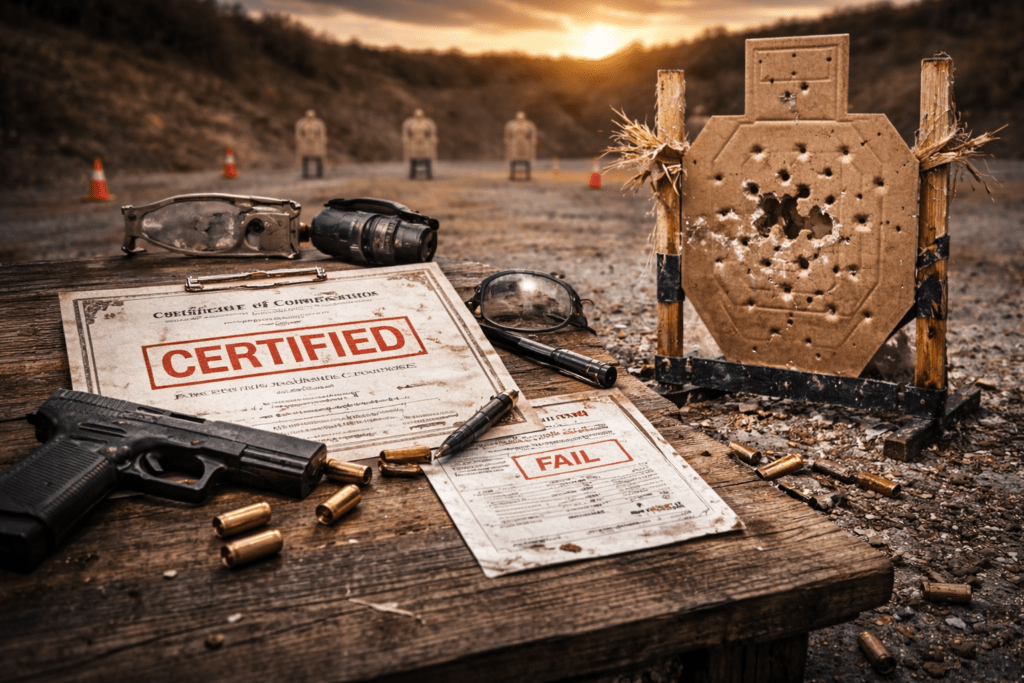
That is why high-liability armed security must be held to a far higher standard than minimum-hour certification culture. The armed guard has to look like the problem the criminal does not want. Otherwise the weapon becomes an accessory to false confidence.
Security Standards Need to Rise. We Help Make That Happen.
Valortec works with law enforcement, private security personnel, and serious armed citizens who understand that high-risk responsibility demands more than minimum standards.
Read More on the Security Training Problem
See Why Training Liability Matters
Book a Consultation
Civilian in Plain Clothes: Lowest Visible Deterrence, Highest Chance of Being Misread
The civilian in plain clothes usually enters the offender’s mind with the lowest level of visible deterrence. There is no obvious authority. No marked role. No visible agency backing. The offender must rely on other cues.
Those cues are usually behavioral: distraction, awareness, isolation, body language, pace, posture, companions, confidence, and whether the person appears likely to resist.
This is where many civilians make catastrophic assumptions. They think concealed capability equals visible deterrence. It does not. Hidden capability may help win a fight already underway, but it often does not stop target selection in the first place because the offender cannot clearly see it.
That is the paradox of plain-clothes defense. The criminal may see the civilian as the easiest target in the environment while being completely wrong about the civilian’s actual readiness, awareness, or armed status. The civilian’s advantage is often not obvious deterrence. It is the criminal’s miscalculation.
That is why range skill alone is not enough. Civilian preparation must include pre-contact awareness, behavioral discipline, positioning, legal judgment, and decision-making under uncertainty. That is precisely where scenario-based training becomes indispensable.
The Hard Ranking From the Offender’s View
If we strip away fantasy and reduce this to pre-contact criminal psychology, the hierarchy usually looks like this:
1. Uniformed Law Enforcement Officer
Highest deterrent value. Strongest visible authority. Strongest perceived consequence structure.
2. Uniformed Armed Security Guard
Strong deterrent when the guard appears competent, alert, and prepared to act. The visible weapon raises the immediate cost of escalation.
3. Uniformed Unarmed Security Guard
Meaningful deterrent against opportunistic behavior, but weaker against determined offenders once limits are recognized.
4. Civilian in Plain Clothes
Lowest visible deterrent during initial target selection. Criminals rely heavily on cues of vulnerability and expected resistance.
That ranking is not absolute. Environment, numbers, criminal intent, intoxication, ideology, desperation, and surprise can all distort it. But as a working model for real-world training, it is brutally useful.
What This Means for Valortec Training
At Valortec, we do not treat presence as a costume issue. We treat it as part of the fight.
That means training people to understand how offenders read them before contact. It means building command presence that is supported by actual capability. It means exposing students to force-on-force environments where posture, timing, communication, movement, and decision-making are tested under stress. It means developing instructors who can teach more than static marksmanship. It means treating law enforcement, armed security, and civilian defense as serious professional disciplines tied to psychology, legality, and consequence.
If your training does not address how criminals actually evaluate risk, then your training is incomplete.
Need Training That Goes Beyond Checkbox Culture?
Valortec provides advanced firearms and decision-making training for law enforcement, armed security, instructors, and responsible civilians who want serious preparation.
Defensive Pistol Training
Red Dot Pistol Class
Force-on-Force Training
Contact Valortec
Final Word
Criminals do not just choose people. They choose what they believe they can control.
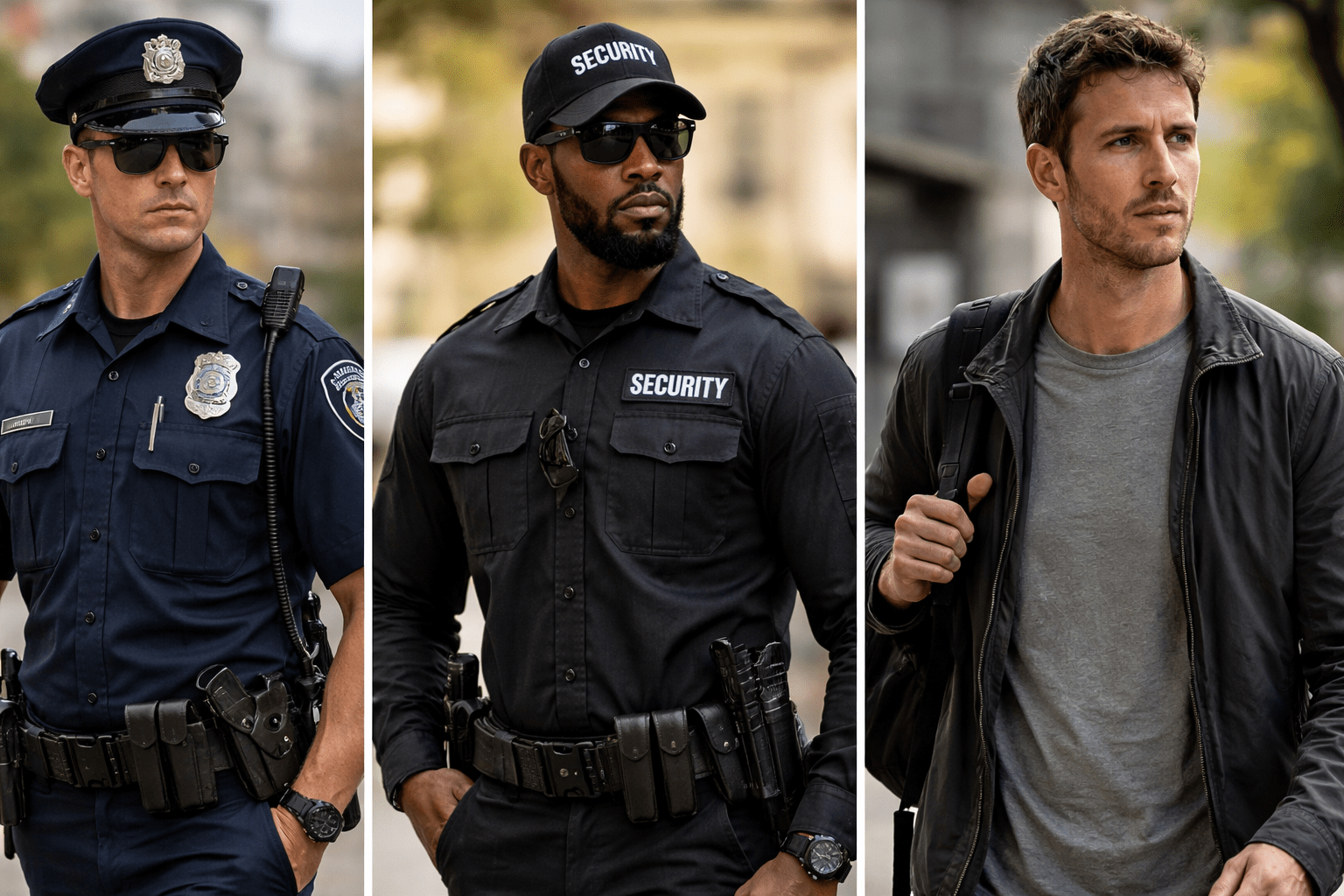
That is why a uniformed officer, a security guard, and a civilian do not register the same way in the offender’s mind. One signals immediate institutional consequence. One signals variable private resistance. One often signals opportunity unless other behavioral cues disrupt that assumption.
The lesson is simple and unforgiving. If you want to survive violent reality, you need more than equipment. You need credibility. You need awareness. You need posture. You need lawful decision-making. You need training that accounts for the way the criminal mind actually reads the environment.
And you need it before the encounter begins.