The Double Inhale Technique: A Scientific Analysis of Stress, Adrenaline, and Proprioceptive Control in Emergency Situations
Abstract
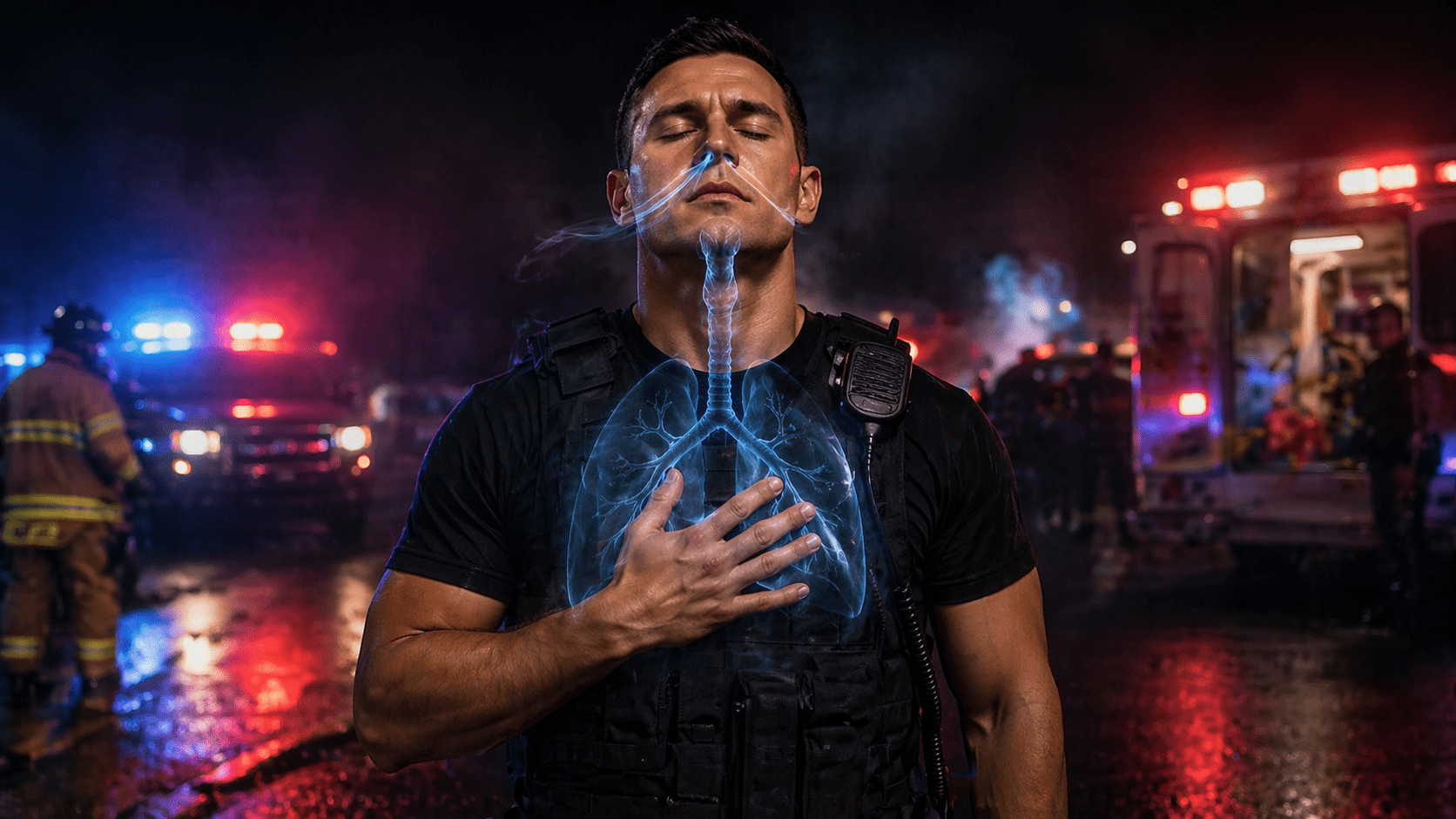
The double inhale technique, often described in modern physiology as the physiological sigh or cyclic sighing, is a breathing pattern involving a nasal inhale, a second shorter inhale layered on top of the first, and a long controlled exhale. This pattern has gained scientific attention because of its potential role in reducing physiological arousal, improving respiratory control, supporting autonomic regulation, and helping the body regain usable control under stress. In emergency situations, the technique does not eliminate adrenaline or replace training. Its value is more specific: it can help interrupt panic breathing, improve oxygen-carbon dioxide balance, support nervous-system regulation, and restore body awareness when stress begins to distort perception, posture, movement, and decision-making. [1][2]
1. Introduction: Breathing as a Control Lever Under Stress
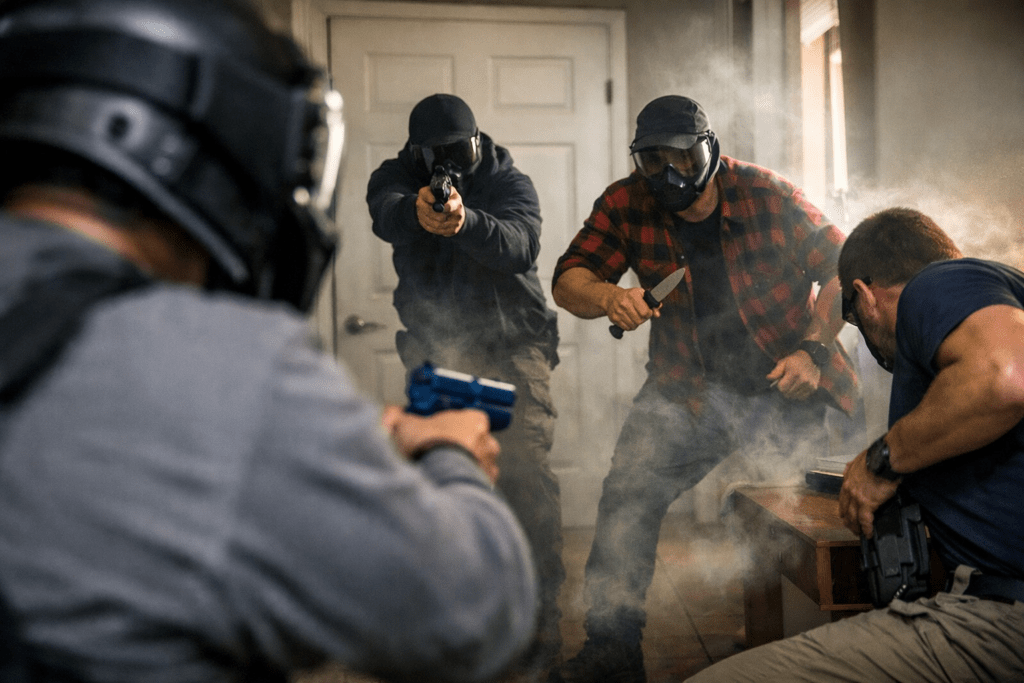
In an emergency, the body rapidly shifts into survival mode. The sympathetic nervous system activates. Adrenaline and related catecholamines increase. Heart rate rises. Breathing often becomes faster, shallower, and less efficient. Muscles tighten. Vision may narrow. Hearing and attention may become selective. Fine motor control can degrade, while gross motor urgency increases.
This is not a character flaw. It is biology.
The acute stress response is designed to help the body survive danger. However, when the stress response becomes excessive or unmanaged, it can interfere with precision, judgment, communication, balance, and controlled movement. For emergency performance, the objective is not to eliminate stress. The objective is to manage it well enough to keep the body functional and the mind oriented. [3][7]
The double inhale technique is valuable because breathing is one of the few systems that is both automatic and voluntary. A person cannot directly command the adrenal glands to stop releasing adrenaline. But a person can influence respiratory rhythm, exhalation length, carbon dioxide tolerance, vagal signaling, and autonomic state through controlled breathing. [10]
2. What the Double Inhale Actually Is
The double inhale follows a simple structure:
First inhale: inhale through the nose.
Second inhale: take a shorter second inhale before exhaling.
Exhale: release slowly and deliberately, usually through the mouth.
This pattern resembles a natural respiratory reflex known as a sigh. In research and clinical language, it is commonly referred to as the physiological sigh or cyclic sighing. A Stanford-led study published in Cell Reports Medicine found that brief daily breathwork improved mood and reduced physiological arousal, with cyclic sighing showing strong effects compared with other breathwork methods and mindfulness meditation. [1][2]
The key is that the technique is not just “taking a deep breath.” It combines lung mechanics, nasal airflow, nitric oxide transport, exhalation control, autonomic regulation, and attention redirection into a short, repeatable pattern.
3. Respiratory Mechanics: Why the Second Inhale Matters
The second inhale is not cosmetic. It has a mechanical purpose.
Under stress, many people shift into shallow upper-chest breathing. This can reduce efficient ventilation and increase the feeling of breathlessness. The first inhale begins lung expansion. The second shorter inhale can help further recruit underinflated regions of the lungs and increase alveolar participation before the controlled exhale.
Sighing is recognized as a normal respiratory reflex that helps maintain pulmonary compliance and reduce atelectasis, which is the underinflation or collapse of small air spaces in the lung. In simple terms, a sigh helps reopen and stabilize parts of the respiratory system that may not be fully participating during shallow breathing. [4]
This is important in emergency performance because poor breathing can amplify panic. Fast, shallow breathing can make the body feel as though the threat is worsening, even when the actual problem is respiratory dysregulation. The double inhale helps break that loop by giving the lungs a stronger expansion phase followed by a longer release phase.
4. Nasal Breathing, Nitric Oxide, and Blood Vessel Regulation
The nasal component matters. The nasal passages and paranasal sinuses produce nitric oxide, a gas involved in vascular regulation, airway function, immune defense, and pulmonary signaling. Nasal breathing can carry nitric oxide into the lower airway, where it may contribute to pulmonary blood-flow regulation and oxygen exchange efficiency. [5][6]
This must be stated precisely.
Nitric oxide does not physically expand the alveoli. The alveoli expand because of airflow, pressure change, lung compliance, and surfactant function. Nitric oxide’s role is more vascular and biochemical. It may help regulate pulmonary blood vessels, influence airway tone, and improve blood-flow matching in the lungs.
A scientifically accurate statement would be:
The double inhale helps mechanically recruit lung volume; nasal breathing may transport nitric oxide from the nasal cavity and sinuses into the lower airway, where it may support pulmonary vascular regulation and oxygen exchange efficiency.
That distinction is important. Serious training should not depend on exaggerated claims. The science is strong enough when stated correctly.
5. Adrenaline Management: Regulation, Not Elimination
In emergency conditions, adrenaline is not the enemy. It is part of the survival response. The problem is not adrenaline itself; the problem is unmanaged arousal.
Excessive arousal can produce rushed movement, poor trigger control in performance tasks, degraded communication, reduced situational awareness, tunnel attention, and unnecessary muscular tension. Research on acute stress and skilled motor performance shows that stress can affect motor unit activation, movement control, memory retrieval, and task execution. [7]
The double inhale does not remove adrenaline from the bloodstream. It does not erase fear. It does not turn a person into a calm machine.
What it can do is help reduce the secondary spiral that often follows adrenaline release:
threat → adrenaline → shallow breathing → panic sensation → more tension → worse movement → worse decision-making.
By forcing a controlled inhale pattern and a longer exhale, the technique can help the body shift from uncontrolled escalation toward managed readiness. The person may still be under stress, but the stress becomes more usable.
6. The Long Exhale: The Real Reset Mechanism
Most people focus on the inhale because it feels like “getting air.” But the exhale is where much of the nervous-system reset occurs.
Slow breathing practices are associated with changes in autonomic function, heart rate variability, respiratory sinus arrhythmia, and emotional regulation. The longer exhale may support parasympathetic influence through vagal pathways, helping reduce unnecessary arousal without making the person passive or sedated. [10]
This is a critical distinction for emergency performance.
The goal is not relaxation in the casual sense. The goal is controlled readiness.
A person in an emergency does not need to be sleepy, soft, or detached. They need to be awake, oriented, capable, and deliberate. The long exhale helps create enough downregulation to reduce panic while preserving alertness.
7. Proprioceptors and Body Control Under Emergency Stress
Proprioceptors are sensory receptors located in muscles, tendons, joints, and connective tissues. They help the brain understand body position, force, movement, tension, and balance.
In an emergency, proprioceptors do not simply “turn off.” The problem is that the brain’s interpretation of proprioceptive information can become distorted by stress, fear, fatigue, pain, respiratory disruption, and excessive muscular tension.
A person under adrenaline may not realize they are:
- Holding their breath.
- Locking the knees.
- Raising the shoulders.
- Clenching the jaw.
- Overgripping.
- Losing posture.
- Moving faster than they can process.
- Applying more force than necessary.
- Losing awareness of foot position or balance.
Research on stress and motor function indicates that acute stress can produce both beneficial and detrimental effects depending on intensity, task type, and training level. Moderate arousal may improve readiness, but excessive arousal can degrade fine motor control, reaction quality, movement speed, and precision. [8]
The double inhale can assist proprioceptive regulation because breath acts as an internal anchor. When the person takes a deliberate breath, they are forced to reconnect with the body. They feel the rib cage expand. They feel the shoulders rise or drop. They notice tension. They may become aware of their stance, jaw, grip, trunk, and balance.
In that sense, breathing becomes more than oxygen exchange.
It becomes a body-mapping tool.
8. Interoception, Proprioception, and the Emergency Feedback Loop
Two sensory systems matter here:
Interoception is the sense of the body’s internal condition: heartbeat, breathing, pressure, temperature, nausea, hunger, and internal tension.
Proprioception is the sense of body position and movement: joint angle, muscle length, pressure, balance, and force.
In a high-stress event, these systems can become noisy. The heart pounds. The breath speeds up. The hands shake. The body feels unstable. The brain may interpret these signals as proof that the emergency is getting worse.
That creates a dangerous feedback loop:
body alarm → fear interpretation → more stress → worse breathing → worse movement → worse decisions.
The double inhale interrupts the loop. It gives the brain a deliberate internal command:
inhale, expand, exhale, orient.
That short sequence can improve the person’s ability to regain posture, reduce unnecessary tension, and return attention to the next correct action.
9. Nasal Breathing and Brain State
Nasal breathing may also influence brain activity. Human research has shown that natural nasal respiration can synchronize electrical activity in the olfactory cortex and limbic-related brain regions, including areas involved in emotion, memory, and threat processing. [9]
This does not mean nasal breathing makes someone fearless. It means breathing is connected to brain rhythms involved in emotional regulation, attention, and cognitive processing.
In emergency performance, this matters because the person does not only need air. They need orientation. They need timing. They need the ability to assess, communicate, move, and make lawful decisions under pressure.
The double inhale may help create that bridge between body control and mental control.
10. Practical Emergency Application
The double inhale is most useful in short windows where a person has a moment to regulate but cannot afford a long recovery protocol.
Examples include:
- After a sudden shock or startle response.
- Before giving verbal commands.
- After running, fighting, lifting, or physical exertion.
- After a high-stress training drill.
- Before calling emergency services.
- Before rendering aid.
- Before making a critical decision.
- During recovery after a threat has passed.
A practical version is simple:
Step 1: Inhale through the nose.
Step 2: Take a second short nasal inhale.
Step 3: Exhale slowly through the mouth.
Step 4: Drop the shoulders, release the jaw, feel the feet.
Step 5: Orient and act.
One to three cycles may be enough. This should not become aggressive hyperventilation. The breath should be controlled, deliberate, and functional.
11. Why This Matters in Emergency Training
In training, the double inhale should not be taught as a wellness gimmick. It should be treated as a performance-control tool.
It can be integrated into:
- Pre-scenario preparation.
- Post-drill recovery.
- Stress-inoculation training.
- Medical response training.
- Verbal command training.
- Decision-making exercises.
- Force-on-force debriefs.
- Physical exertion recovery blocks.
The technique becomes more valuable when it is practiced before the emergency. A person who only understands the idea intellectually may not access it under stress. A person who has rehearsed it under pressure is more likely to use it when adrenaline appears.
That is the real lesson:
Breathing is not theory. Breathing is a trained response.
12. Limitations and Safety Considerations
The double inhale is useful, but it has limits.
It does not:
- Eliminate adrenaline.
- Guarantee calmness.
- Replace emergency skills.
- Replace medical care.
- Replace tactical judgment.
- Cure anxiety disorders.
- Override poor training.
- Make unsafe decisions safe.
People with cardiovascular disease, respiratory disease, fainting history, panic disorder, recent surgery, or neurological conditions should use caution and consult a medical professional before using aggressive breathwork. Repeated deep breathing should never be practiced to the point of dizziness while driving, swimming, operating machinery, handling firearms, or performing safety-sensitive tasks.
Conclusion
The double inhale technique is scientifically credible because it works across several systems at once. It mechanically expands the lungs, may help recruit underinflated alveoli, supports nasal nitric oxide transport, strengthens the exhale phase, and gives the autonomic nervous system a rapid regulatory signal.
Under emergency stress, its greatest value is not comfort.
Its greatest value is control.
Adrenaline will come. Stress will happen. The body will react. The question is whether the person has trained a reliable way to regain command of breath, posture, movement, and attention.
The double inhale is one of the simplest tools available for that purpose.
References
- Balban, M. Y., Neri, E., Kogon, M. M., Weed, L., Nouriani, B., Jo, B., Holl, G., Zeitzer, J. M., Spiegel, D., & Huberman, A. D. “Brief structured respiration practices enhance mood and reduce physiological arousal.” Cell Reports Medicine, 2023. (Cell)
- Stanford Medicine. “‘Cyclic sighing’ can help breathe away anxiety.” Stanford Medicine Scope Blog, 2023. (Stanford Medicine)
- Russell, G., & Lightman, S. “The human stress response.” Nature Reviews Endocrinology / NIH-accessible stress-response literature discussing sympathetic and HPA-axis activation under stress. (PMC)
- Hartland, B. L., Newell, T. J., & Damico, N. “Alveolar recruitment maneuvers: are your patients missing a sigh?” Respiratory Care, 2015. The paper discusses sighing as a normal homeostatic reflex that helps maintain pulmonary compliance and reduce atelectasis. (PubMed)
- Lundberg, J. O., et al. “Inhalation of nasally derived nitric oxide modulates pulmonary function in humans.” Acta Physiologica Scandinavica, 1996. (PubMed)
- Sánchez Crespo, A., et al. “Nasal nitric oxide and regulation of human pulmonary circulation.” Journal of Applied Physiology, 2010. (Physiology Journals)
- Anderson, G. S., Di Nota, P. M., Metz, G. A. S., & Andersen, J. P. “The impact of acute stress physiology on skilled motor performance.” Frontiers in Psychology, 2019. (PMC)
- Krüger, M., et al. “Failure of motor function: a developmental embodiment perspective.” Frontiers in Human Neuroscience, 2023. This review discusses how acute and chronic stress can affect fine motor control, reaction time, movement speed, and transient motor functioning. (Frontiers)
- Zelano, C., Jiang, H., Zhou, G., et al. “Nasal respiration entrains human limbic oscillations and modulates cognitive function.” Journal of Neuroscience, 2016. (PMC)
- Zaccaro, A., Piarulli, A., Laurino, M., et al. “How breath-control can change your life: a systematic review on psycho-physiological correlates of slow breathing.” Frontiers in Human Neuroscience, 2018. (PMC)