Pseudo Firearms Instructors Are a Public Safety Problem
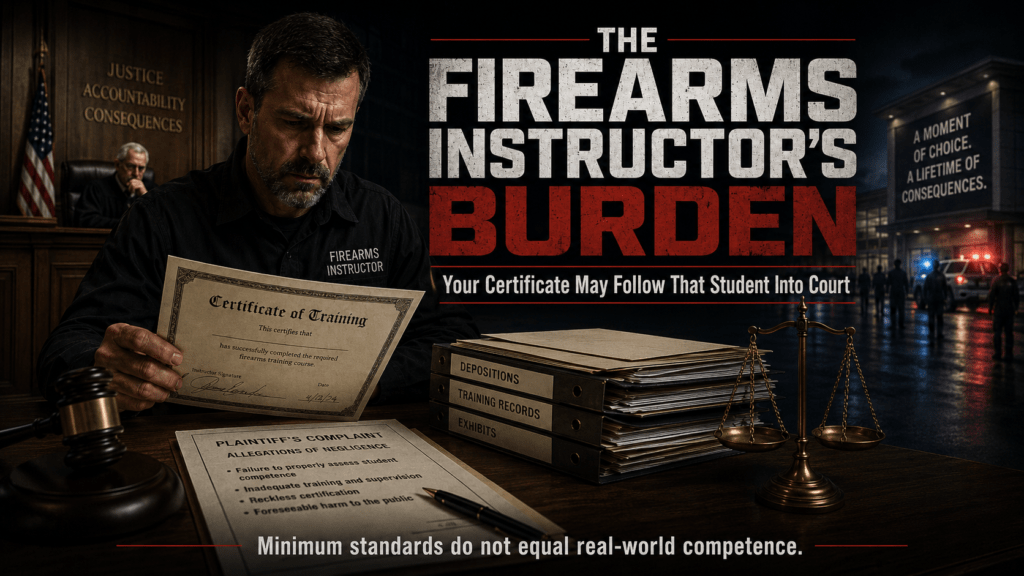
Too many firearms instructors know how to run a drill, but have no clue how quickly liability, negligent entrustment, vicarious liability, and federal compliance issues can destroy a business and put innocent people at risk.
The firearms industry does not just have a standards problem. It has a legal-ignorance problem. And that ignorance is becoming a serious threat to students, ranges, businesses, and the public.
Valortec’s Position
A firearms instructor is not just responsible for marksmanship. A real instructor is responsible for judgment, lawful conduct, risk control, student screening, and public safety. Anything less is not professionalism. It is negligence dressed up as confidence.
They Know Drills. They Do Not Know Duty.
There are far too many so-called firearms instructors operating today who can posture on the range, run a timer, wear tactical gear, and market themselves online, yet they have no real understanding of the legal realities tied to their business. That is not a minor weakness. That is a major professional failure.
These people want the title of instructor. They want the authority. They want the attention. They want the money. But they do not want the burden that comes with legitimate firearms instruction.
They do not understand that the moment they bring unknown students onto a firing line, furnish firearms, provide ammunition, supervise live-fire exercises, or offer advanced tactical content, they are creating legal exposure. They are no longer just teaching. They are assuming responsibility.
And that is exactly where many of them fail.
Training Without Legal Knowledge Is a Business Liability
Anybody can teach a drill. Not everybody is qualified to manage the legal risk that comes with firearms instruction.
Liability Starts Before the Injury
One of the biggest mistakes pseudo instructors make is believing liability only appears after something goes wrong. They think the danger begins after a negligent discharge, an injury, or a lawsuit. That is false.
Liability often begins the moment a business stops operating like a professional enterprise and starts operating like a cash table.
When an instructor accepts unknown students with little or no screening, places firearms in their hands, directs live-fire movement, and provides training without disciplined intake procedures, that instructor is building a foreseeable zone of risk. That matters because foreseeable risk is exactly what gets examined when things go bad.
A waiver is not a shield against bad judgment. A signed form does not erase careless decision-making. And “I didn’t know” becomes a weak excuse when a professional should have known better.
Negligent Entrustment Is Real, and It Matters
Negligent entrustment is not some abstract legal phrase to throw around for effect. It is a serious issue for anyone who provides access to dangerous tools, including firearms.
At its core, negligent entrustment means supplying a dangerous item to someone the supplier knew, or should have known, was unfit, reckless, incompetent, impaired, or otherwise likely to use it in a dangerous manner. For firearms instructors, this issue becomes painfully obvious.
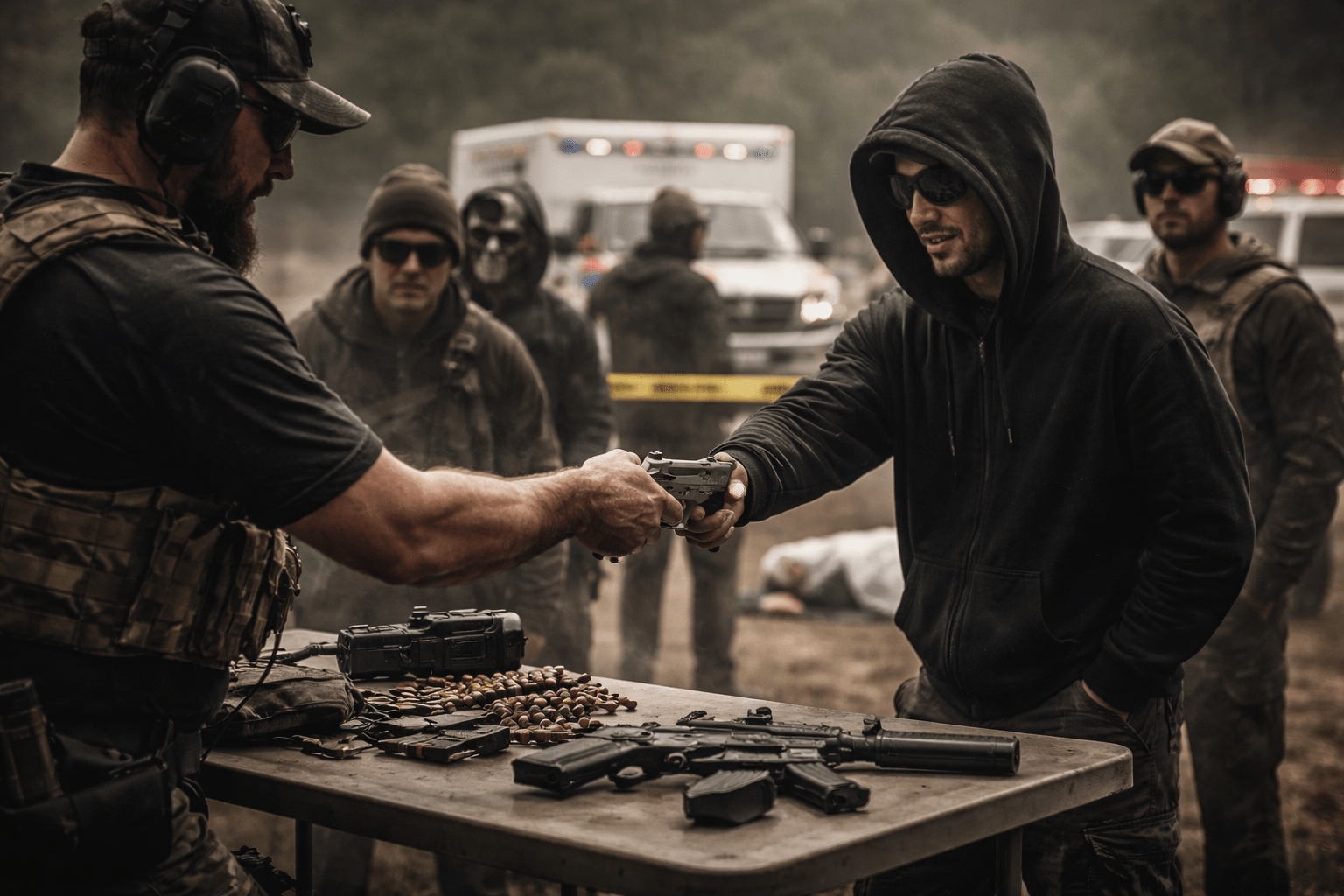
Ask the hard question: what exactly is happening when an instructor hands a gun to a stranger, provides ammunition, and starts running drills with little to no meaningful verification?
That instructor is not merely teaching. He is entrusting.
And if that entrustment is careless, the consequences can spread far beyond the firing line.
The Hard Truth
A student’s payment does not equal legal eligibility. A waiver does not equal protection. A social media presence does not equal competence. And an instructor certificate does not equal professional judgment.
They Do Not Vet Their Students, and That Is Dangerous
This is where the problem becomes even more serious. Many pseudo instructors have no meaningful vetting process at all.
They do not ask the right questions. They do not verify enough. They do not build intake systems that reflect the seriousness of the environment they control. They do not think critically about whether a student should even be on the line in the first place.
That kind of carelessness is dangerous because firearms training is not a casual activity. It is not yoga. It is not a weekend hobby with harmless consequences. It is an environment involving lethal tools, compressed decision-making, live ammunition, human stress, and legal exposure.
Anyone operating in that environment without disciplined screening standards is playing games with public safety.
Vicarious Liability Can Crush a Weak Training Business
Bad training businesses often try to hide behind staff, assistant instructors, contractors, or range personnel when something goes wrong. They want the profit when the class runs smoothly, but when an incident happens, they suddenly act as if the problem belongs to somebody else.
That is not how exposure works.
If your business marketed the class, collected the money, controlled the training environment, selected the personnel, and allowed the instruction to move forward, your business may still be in the line of fire. Weak standards inside a company do not stay isolated. They become organizational risk.
If your staff is reckless, your company can become reckless. If your instructors are unqualified, your brand becomes part of that failure. That is exactly why serious companies hold their instructors to a higher standard, not a lower one.
Stop Training With Pretenders
Students, ranges, and organizations need to ask better questions before trusting anyone who claims to be an instructor.
- What legal and compliance knowledge does this instructor actually have?
- What screening process is used before a student gets on the line?
- What standards are in place for live-fire safety and accountability?
- Does this training business understand liability exposure beyond waivers and slogans?
ITAR Ignorance Can Turn Into a Federal Problem
This is where many fake professionals completely expose themselves.
They throw around terms like ITAR to sound informed, but in reality they do not understand the basics of export-control compliance, who qualifies as a U.S. person, where foreign-person issues may arise, or how specialized training can create federal scrutiny in the wrong circumstances.
That level of ignorance is not impressive. It is dangerous.
An instructor who talks tough online about advanced weapons or tactical training, yet has no clue when legal counsel is required or when compliance review should happen, is not a serious operator. He is a future problem.
Federal compliance is not a branding accessory. It is not optional knowledge. It is part of running a legitimate training business in a field where instruction, technology, equipment, and student status can all carry legal implications.
Public Safety Means More Than Good Shooting
The ugliest part of this entire issue is that many pseudo instructors are not careless because they are confused. They are careless because real professionalism takes work.
Screening students properly takes work. Building lawful procedures takes work. Maintaining documentation takes work. Understanding risk takes work. Consulting counsel takes work. Turning away the wrong person takes discipline. Holding the line on standards takes backbone.
It is far easier to take the money, run the class, post the pictures, and hope nothing goes wrong.
But that is not professionalism. That is moral laziness disguised as confidence.
And once enough people in this industry operate that way, the damage spreads everywhere. It hurts students. It hurts legitimate instructors. It hurts ranges. It hurts the credibility of the firearms community. It creates preventable risk where none should exist.
What Real Professionals Do
Real firearms professionals do not operate on ego, assumptions, or vibes. They build systems. They verify identity. They apply standards. They understand that waivers are limited. They know student selection matters. They know instructor conduct matters. They know organizational exposure matters. And they know that every student on the line is a responsibility, not just a payment.
Valortec’s Final Word
The firearms industry does not need more self-appointed instructors who can perform on camera but collapse under real legal scrutiny.
It does not need more range personalities pretending to be professionals while ignoring duty, compliance, screening, and accountability.
It needs standards. It needs integrity. It needs instructors who understand that firearms training is not just about hitting a target. It is about responsibility, lawful conduct, judgment, and public safety.
The instructor who understands recoil but not responsibility is not an asset.
He is a hazard.
Train With a Higher Standard
Valortec believes firearms instruction must be grounded in lawful conduct, real accountability, disciplined standards, and professional judgment. Anything less puts students, families, businesses, and the public at risk.
Frequently Asked Questions
Why is legal knowledge important for firearms instructors?
Because firearms instruction is not just about shooting skill. Instructors and training businesses can create serious exposure when they ignore liability, student screening, negligent entrustment concerns, staffing issues, and compliance obligations. A technically skilled shooter without legal awareness can still be a major risk.
What is negligent entrustment in firearms training?
Negligent entrustment generally refers to providing access to a dangerous item, such as a firearm, to a person the provider knew or should have known was unfit, reckless, impaired, or otherwise likely to use it in a dangerous manner. In a training context, poor judgment about who is allowed on the line can become a serious legal issue.
Can a firearms training business be liable for the actions of its instructors or staff?
Yes. Depending on the facts, a business may face exposure when staff or instructors act within the scope of their duties and create harm through poor supervision, bad decisions, or weak operational standards. That is one reason serious academies maintain strict internal accountability.
Why should students care about an instructor’s compliance knowledge?
Because poor compliance knowledge often reflects poor judgment overall. If an instructor does not understand lawful conduct, student screening, liability, and basic business exposure, that may signal a deeper lack of professionalism that can affect safety, course quality, and risk to everyone present.
What makes a professional firearms academy different?
A professional academy operates with standards, documentation, discipline, lawful procedures, serious instructor accountability, and a clear commitment to public safety. It does not rely on ego, marketing theatrics, or shortcut thinking. It treats every student and every training environment as a serious responsibility.