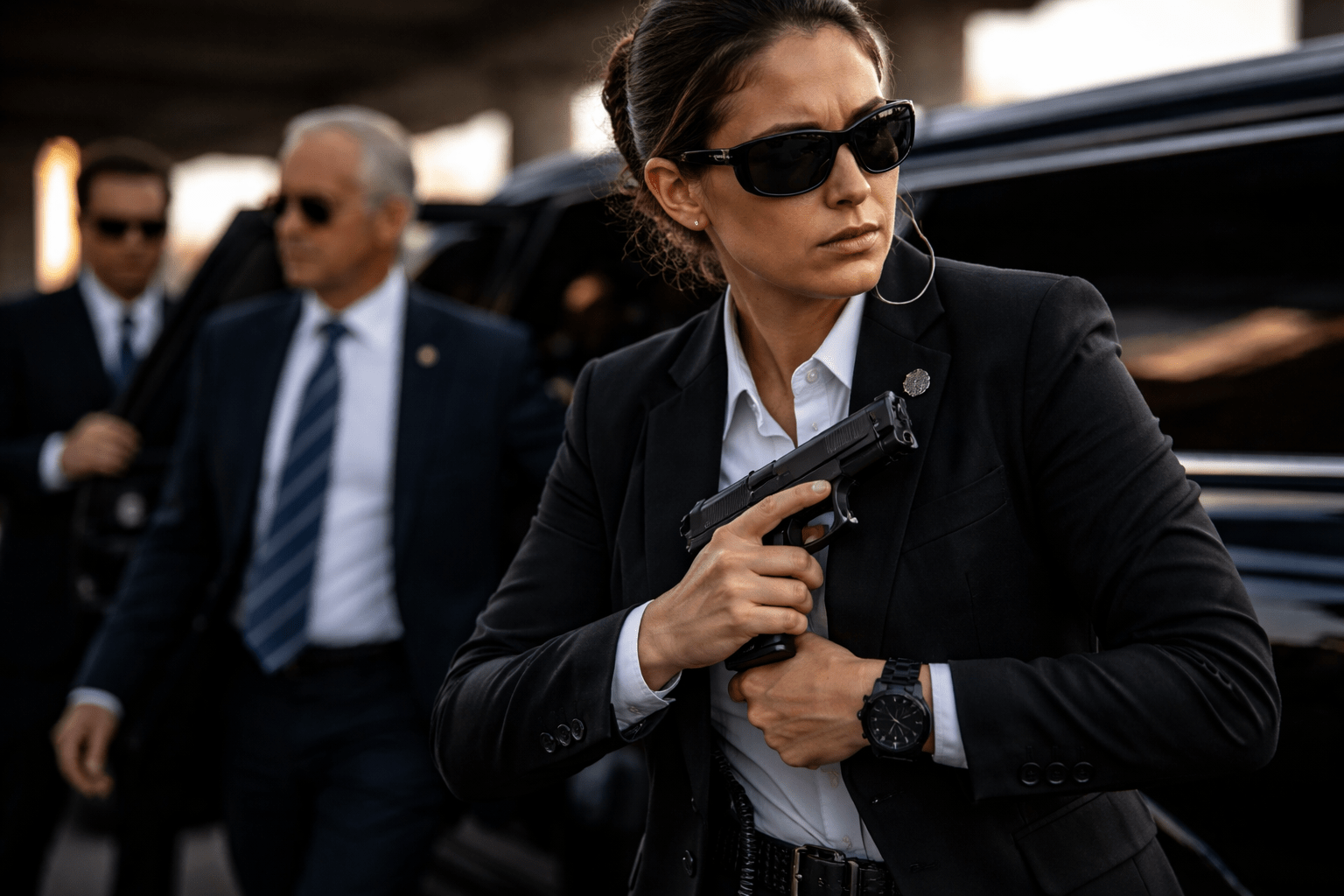
Negligent Discharge Exposes Training Failure
Educational analysis only. This article is not legal advice.
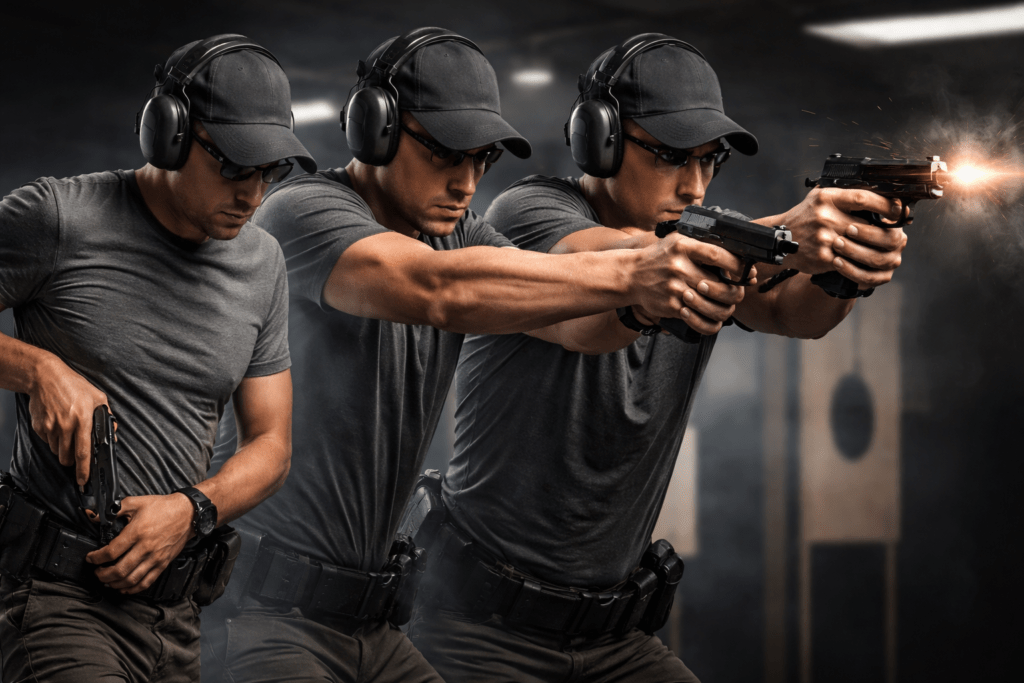
A negligent discharge involving a U.S. Secret Service agent assigned to former First Lady Jill Biden is not just another embarrassing headline. It is a blunt reminder that firearms programs do not fail only at the trigger. They fail at the point of training, at the point of supervision, at the point of remediation, and at the point where someone with authority signs a name and says, “This person is ready.”
That is where this conversation needs to be. Not in excuses. Not in spin. In standards.
The Incident Is the Symptom. The System Is the Issue.
Public reporting states that on March 27, 2026, a Secret Service agent assigned to Jill Biden suffered a non-life-threatening self-inflicted gunshot wound during what officials described as a negligent discharge near Philadelphia International Airport. Biden was not present at the time, and the matter was referred for internal review. Those are the facts presently in the open record.
That alone is enough to expose the larger truth: assignment prestige does not replace competence, and agency reputation does not erase unsafe gun handling.
Whenever a negligent discharge occurs in a professional setting, the public sees the bang. What the public usually does not see is the chain behind it: weapons handling habits, equipment management, administrative manipulation, supervision quality, remediation standards, qualification culture, and whether weak performance or unsafe behavior had already been noticed, tolerated, normalized, or signed off.
That chain matters because incidents involving firearms are not judged only by the final act. They are judged by the decisions that made the final act foreseeable.
Valortec Position
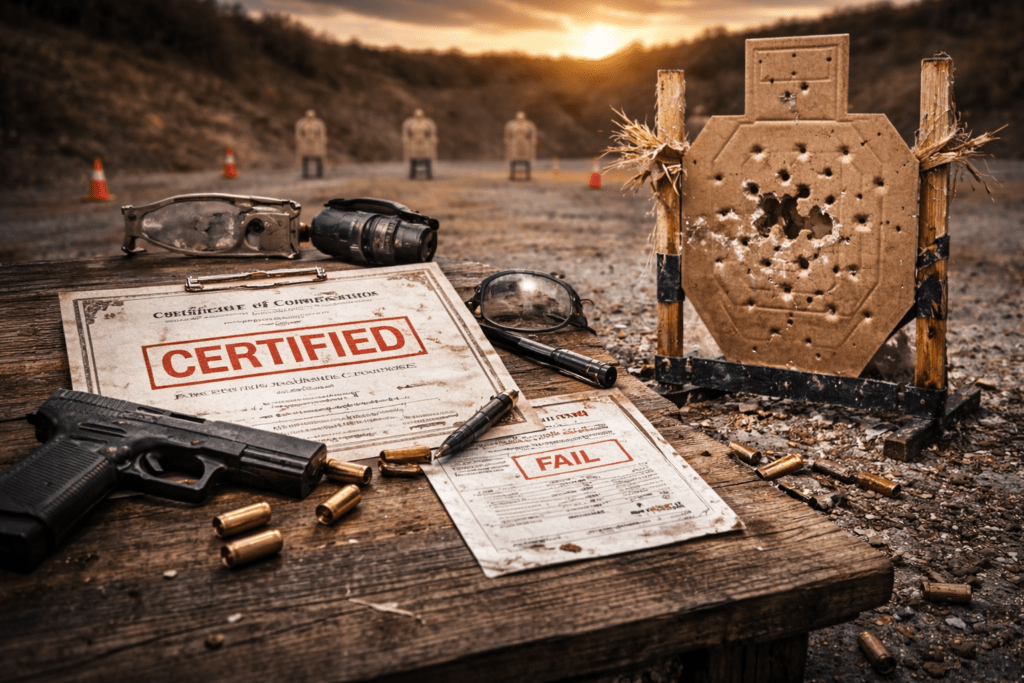
A pass is not a courtesy. A qualification is not a participation trophy. An instructor signature is not administrative ink. It is a professional endorsement that can carry public-safety consequences long after the paper is filed.
Why Instructor Approval Carries Legal Weight
In litigation, the question is rarely limited to who physically discharged the firearm. The question expands fast. Who trained that person? Who evaluated that person? What standard was used? What deficiencies were known? What remedial steps were taken? What records exist? What warning signs were ignored? Why was that person approved to continue carrying a firearm?
Those questions are not hypothetical. Under ordinary civil-litigation rules, parties may obtain discovery into relevant, nonprivileged material tied to a claim or defense. In practical terms, that means qualification records, lesson plans, remediation notes, range policies, internal emails, inspection logs, instructor comments, disciplinary records, equipment policies, and supervisory decisions can all become part of the evidence landscape if a firearms-handling incident leads to suit.
This is the part too many weak programs refuse to confront. The record does not stay buried because a department is embarrassed. The paper trail becomes part of the fight.
And once the records come out, the next phase begins: expert review. Firearms instructors, training administrators, armorers, use-of-force experts, and policy specialists may be asked to explain whether the training was competent, whether the standard was meaningful, whether the supervision was adequate, whether the equipment setup was appropriate, and whether the failure should have been foreseeable.
That means a bad approval decision can age into a serious evidentiary problem.
Negligence, Foreseeability, and the Dangerous Game of Passing the Wrong Person
There is a reason negligent entrustment remains a powerful legal concept in firearms-related litigation. The core logic is straightforward: when a dangerous instrument is put into the hands of someone the supplier knows, or reasonably should know, is likely to use it in a manner involving unreasonable risk, the legal system does not shrug its shoulders.
That same logic should matter deeply to instructors and training leaders even outside the narrow seller context. If a trainee shows unsafe handling, poor judgment, poor holster discipline, poor trigger-finger management, repeated procedural failure, inability to follow commands, or inability to maintain safe control under ordinary pressure, then “passing them anyway” is not kindness. It is exposure.
It is exposure for the instructor. Exposure for the training unit. Exposure for the agency. Exposure for the public.
Too many organizations still treat qualification as a throughput problem. Get the line moving. Keep the numbers clean. Avoid conflict. Keep command happy. Move the person through. That mentality is administrative cowardice disguised as efficiency.
And it is dangerous.
Qualification Scores Alone Do Not Prove Competence
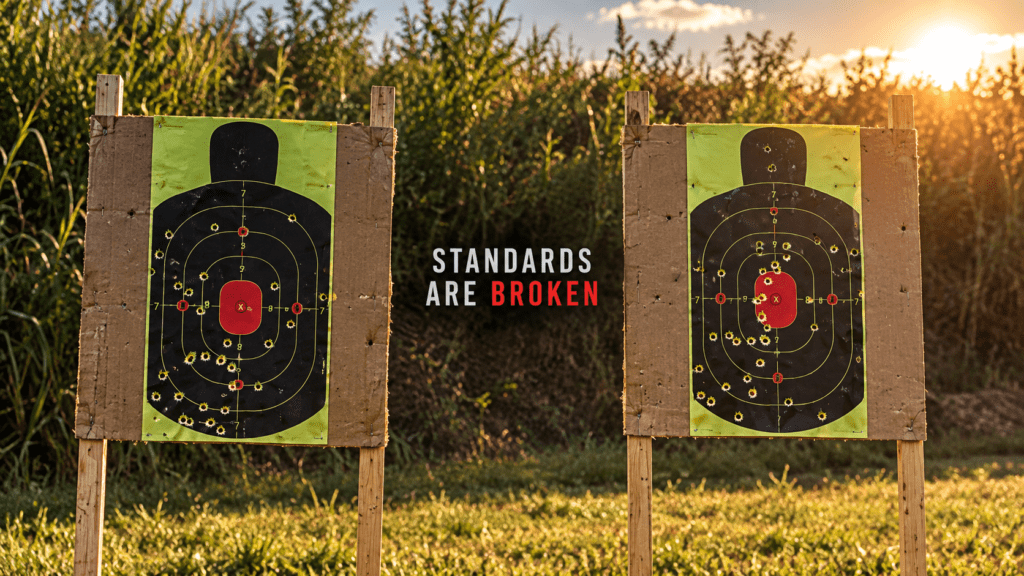
One of the most persistent failures in firearms programs is the belief that acceptable hits on paper equal operational readiness. They do not.
Marksmanship is only one slice of true weapons competence. A person may print an acceptable score and still be unsafe with the firearm. A person may pass a timed course of fire and still demonstrate poor muzzle management, poor reholstering discipline, unsafe loading and unloading behavior, bad equipment placement, weak retention practices, poor movement control, or flawed judgment during routine handling.
That is why serious programs do not evaluate only impact location. They evaluate the entire handling chain.
A technically credible standard should measure at least the following:
- Safe draw and reholster mechanics
- Consistent trigger-finger discipline outside intentional firing
- Muzzle control during movement and administrative handling
- Loading, unloading, and status-check procedures
- Equipment fit, access, retention, and compatibility
- Reaction to instruction, correction, and stress
- Decision-making discipline around live weapons
- Ability to remain safe when distracted, rushed, or fatigued
If the standard only measures where rounds landed, then the standard is incomplete. And incomplete standards produce clean spreadsheets while hiding dirty reality.
Public Safety Starts Before the Incident
Valortec teaches what too many programs avoid: safety is not proven after the gun goes off. It is proven in the standards, discipline, corrections, and refusals that happen long before the incident ever has a chance to occur.
Need training built on performance, accountability, and real standards?
Explore Valortec training programs and instructor-led development built for serious shooters, professionals, and responsible organizations.
Command Pressure Is Not a Defense
One of the ugliest realities in institutional training is pressure from above. Directors want numbers. Administrators want completion. Supervisors want problems to disappear. Some instructors are quietly told to be flexible, stop creating friction, stop failing marginal people, or stop delaying the pipeline.
That pressure changes nothing about the consequences of a negligent approval.
If a person is not safe, not competent, not disciplined, or not ready, then the right answer is not to accommodate the command climate. The right answer is to stop the process. Failing an unsafe person is not insubordination. It is professional integrity.
An instructor who caves to pressure is not protecting the institution. That instructor is helping build the record that may later damage it.
The Signature Problem
Every firearms instructor needs to understand the weight of a signature.
A signature on a roster, score sheet, remedial note, training completion form, or proficiency approval can later be read as more than confirmation that a class happened. It can be interpreted as evidence that the instructor observed the candidate, evaluated the candidate, and endorsed the candidate as safe and competent under the stated standard.
That is why lazy sign-offs are dangerous. So are political sign-offs. So are convenience sign-offs. So are “we’ll fix it later” sign-offs.
If the person later hurts themselves or someone else, investigators and litigators may not stop at the immediate mistake. They may go backward through the approval chain and ask who knew what, who documented what, who ignored what, and who signed off anyway.
That is not paranoia. That is how evidence works.
A Negligent Discharge Is Usually a Failure Chain
Negligent discharges do not deserve shallow analysis. They should be examined as failure chains.
The discharge may be the visible event, but the underlying chain often includes one or more of the following:
- Weak initial instruction
- Poor equipment setup or incompatibility
- Unsafe administrative handling habits
- Inadequate supervision
- Deficient remedial training
- Normalized shortcuts
- Instructors afraid to fail people
- Command pressure to maintain numbers
- Qualification systems that reward score instead of safety
That is why the bang is never the full story. It is the end point of the story the system allowed to develop.
What Serious Programs Must Do Now
Programs that actually care about public safety should take this kind of incident as a warning, not as gossip.
- Re-evaluate qualification standards beyond shot placement alone
- Document unsafe handling and remedial work honestly
- Remove political or administrative pressure from pass/fail decisions
- Hold instructors accountable for soft sign-offs
- Audit equipment fit, holsters, access, and weapon-management procedures
- Require correction under pressure, not just performance in comfort
- Refuse to certify people who are not truly safe and ready
This is not harsh. It is responsible.
The public has every right to expect that anyone authorized to carry a firearm professionally was trained by people with the backbone to say no when no was required.
The Real Lesson
The lesson from this Secret Service negligent discharge is not that one agent had one bad moment. The lesson is that every negligent discharge forces a harder question: who approved the chain that led there?
That is where real accountability lives.
Not in slogans. Not in prestige. Not in agency branding. In standards. In documentation. In instructor integrity. In the willingness to fail unsafe people before unsafe people become public-safety incidents.
Because when the gun goes off negligently, the investigation does not stop at the trigger. It follows the chain of approval.
Train to a Real Standard
Valortec advocates for firearms training that is lawful, evidence-driven, performance-based, and honest about accountability. Weak standards do not protect institutions. They expose them.
For serious firearms instruction, instructor development, and performance-based training, connect with Valortec.
Frequently Asked Questions
Why does a negligent discharge raise questions about training and not just individual error?
Because negligent discharges often reflect more than one bad movement. They can expose failures in instruction, supervision, qualification standards, remedial training, equipment selection, and approval culture.
Can qualification records become relevant in litigation?
Yes. If a firearms-handling incident leads to a lawsuit, qualification records, training notes, policies, communications, and remediation history may all become relevant to questions of foreseeability, supervision, and competence.
Why is an instructor signature such a serious issue?
A signature may later be treated as evidence that the instructor observed, evaluated, and approved the candidate under the stated standard. That is why passing an unsafe person is more than bad judgment. It can become part of the liability story.
Is a passing score enough to prove someone is safe to carry a firearm?
No. Scoring performance alone does not measure complete weapons competence. Safe carry requires proper handling, discipline, judgment, equipment control, and consistent procedural compliance under realistic conditions.
What is the core lesson for agencies and training programs?
Stop treating qualification as throughput. Enforce standards honestly, document deficiencies, remediate when possible, and fail unsafe personnel when necessary. Public safety depends on it.
References and Sources
- Reuters: Secret Service agent assigned to Jill Biden shoots self in leg
- Associated Press: Secret Service agent assigned to Jill Biden accidentally shoots himself in leg at airport
- Federal Rule of Civil Procedure 26 – Discovery
- Federal Rule of Evidence 702 – Expert Testimony
- 15 U.S.C. § 7903 – Definition of negligent entrustment