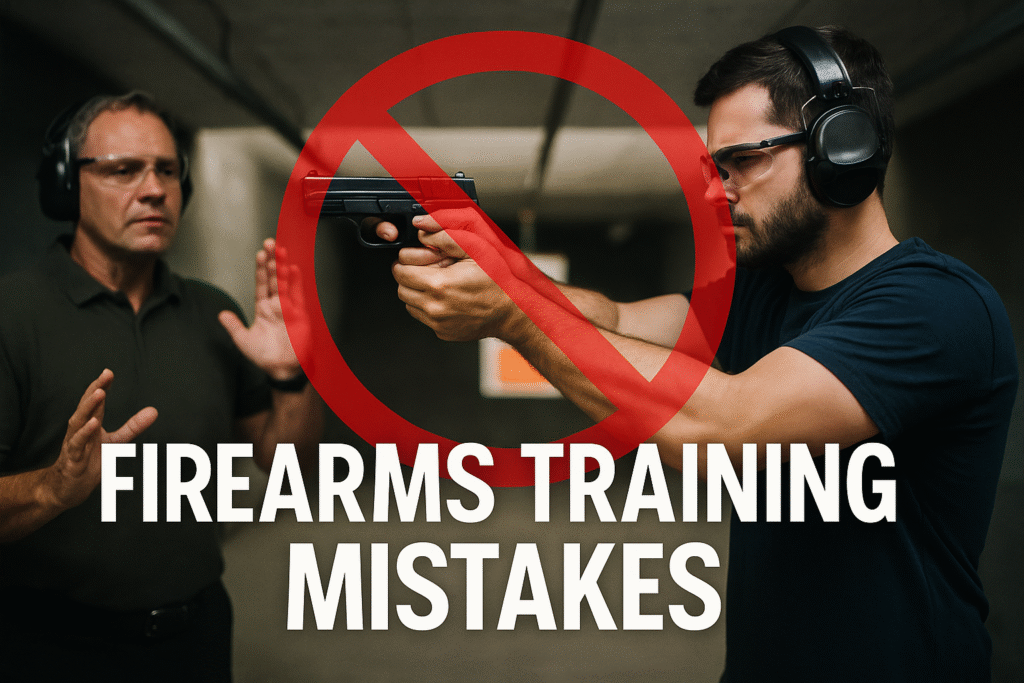
Now Comes the Part Nobody Wants to Talk About: Training.
Buying a firearm does not make you trained. Carrying one does not make you prepared. And confidence without competence can become a dangerous illusion.
Women are entering American gun ownership in numbers that would have been almost unimaginable a generation ago.
That is good news.
But the firearms industry needs to stop celebrating the sale as if the mission has been accomplished.
It hasn’t.
According to RAND’s 2026 analysis of General Social Survey data, women’s personal firearm ownership increased from roughly 10% in 2018 to more than 16% in 2024. Women represented about 32% of all gun owners by 2024, and researchers found that women have accounted for almost half of new gun owners in recent years.
Reason recently highlighted the same transformation in “Women Are Better Armed Than Ever,” arguing that firearms have increasingly become an accessible means of self-defense for women across demographic groups.
Good.
Now let’s have the conversation that is far less profitable and considerably less comfortable:
Are They Actually Being Trained?
The gun counter is the beginning.
Not the finish line.
The firearm sitting in your safe does not give you skill.
A concealed-carry certificate does not magically create competence.
Watching shooting videos does not create competence.
Going to the range twice a year does not create competence.
And dumping fifty rounds into a paper target from seven yards under absolutely no pressure certainly does not prepare someone to make intelligent decisions during a violent encounter.
The growing number of female firearm owners should be accompanied by an equally aggressive increase in professional firearms training for women.
Anything less is selling equipment without developing capability.
Women Don’t Need “Cute” Firearms Training. They Need Good Firearms Training.
Here is another uncomfortable truth.
Women do not need watered-down firearms classes.
They do not need a pink target, a catchy T-shirt and an instructor who spends four hours telling them how empowering shooting is.
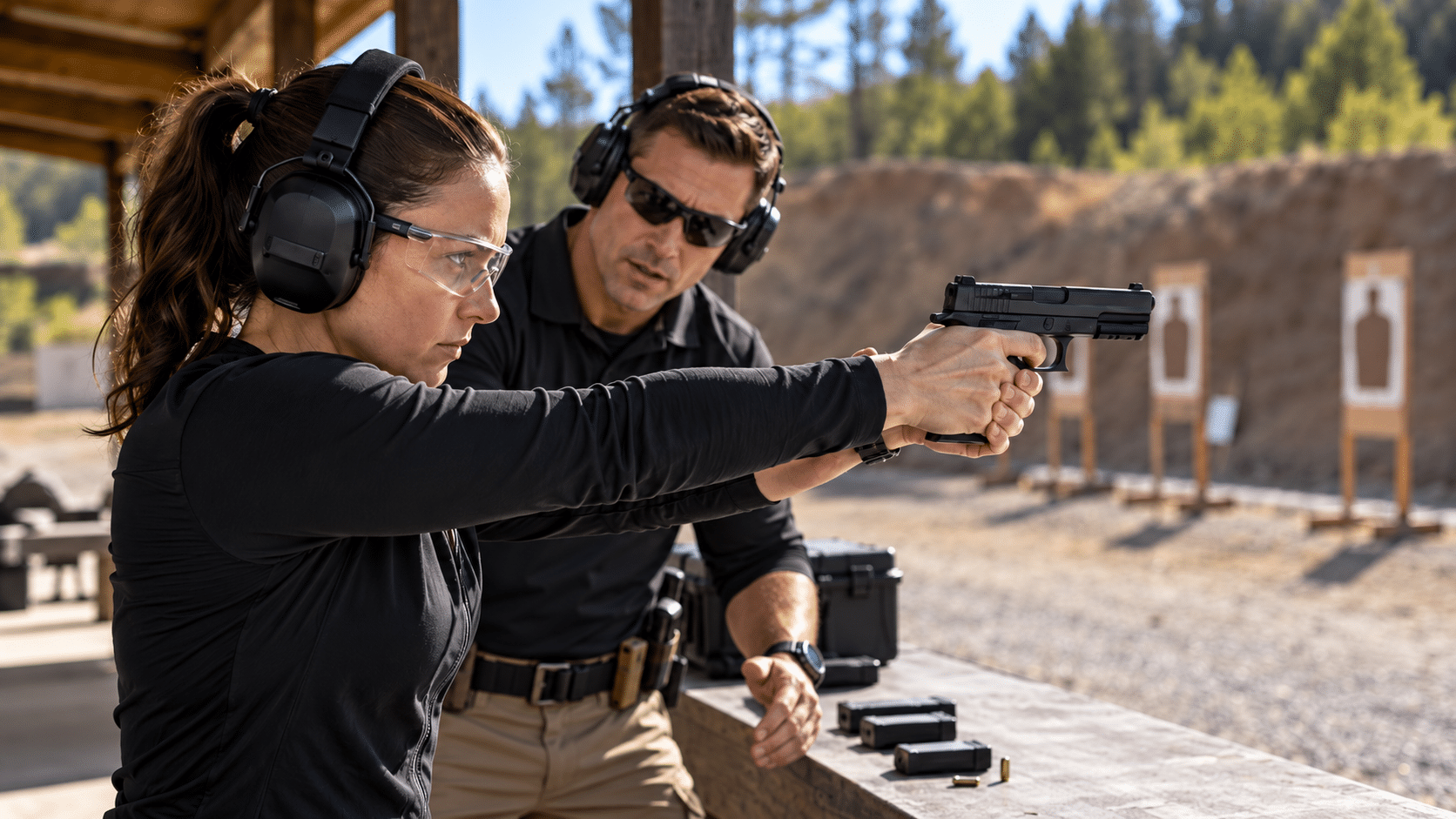
They need professional instruction.
They need safety.
They need fundamentals.
They need recoil-management skills.
They need trigger control.
They need visual processing.
They need consistent weapon manipulation.
They need judgment.
They need to understand their own limitations.
And eventually, if carrying for personal defense is their objective, they need progressive training that forces them to safely perform beyond the comfort of a static firing line.
The NRA itself distinguishes between merely knowing how to shoot and knowing how to teach shooting. Its instructor-development standards require candidates to demonstrate firearm safety and shooting ability while also developing instructional methodology and teaching skills.
That distinction matters.
A good shooter is not automatically a good instructor.
And an Instagram biography definitely does not make someone one.
How Women Should Choose a Firearms Instructor
This is where people need to become more demanding.
Don’t choose your firearms instructor because he looks tactical.
Don’t choose a class because the instructor has 200,000 Instagram followers.
Don’t choose one because somebody wrote “certified instructor” underneath their name.
And don’t assume that military, law-enforcement or competition experience automatically translates into the ability to teach a beginning shooter.
Ask questions.
What are the instructor’s actual credentials?
Look for legitimate, verifiable, discipline-specific qualifications.
How long have they actually been teaching?
Teaching students and shooting personally are two completely different skill sets.
What is the curriculum?
A legitimate beginner program should have a clearly defined progression—not random drills assembled because they look impressive on social media.
The NRA’s own basic pistol curriculum, for example, includes firearm safety, firearm operation, ammunition knowledge, storage, shooting fundamentals, marksmanship and range safety.
How much individual coaching will you receive?
A class with twenty beginners and one instructor may be profitable.
That does not necessarily make it productive.
Ask how many instructors or range personnel will be present and how students will receive corrections.
Does the instructor explain why something works?
“Because that’s how I was taught” isn’t an explanation.
Neither is:
“I’ve been doing this for twenty years.”
Bad technique practiced for twenty years is simply experienced bad technique.
At Valortec, we advocate a science-driven approach that examines biomechanics, visual processing, motor learning, recoil management and performance under stress rather than simply demanding that students imitate an instructor. Learn about the Science of Marksmanship approach
Explore the broader range of safety and preparedness programs at Valortec Self Defense School Tampa, including options for students seeking a structured path into training.
Your First Class Should Build Skill—Not Stroke Your Ego
A professional instructor should make you more confident.
But confidence should be the result of demonstrated competence, not the objective of the class.
There is a major difference.
A competent instructor should be willing to correct you.
Your grip may be wrong.
Your trigger manipulation may be inconsistent.
Your stance may be fighting your own biomechanics.
You may be anticipating recoil.
You may be looking at the wrong visual information.
Good.
That is why you paid for training.
You didn’t hire an instructor to congratulate you.
You hired one to identify weaknesses before those weaknesses matter.
For newer Florida shooters, Valortec’s guide to beginner firearms training in Florida explains how students can progress from basic firearm handling toward greater confidence and proficiency.
Stop Confusing a Concealed-Carry Class With Defensive Training
This will upset some instructors.
It should.
A short course designed primarily to satisfy an administrative or educational requirement is not automatically a comprehensive defensive-pistol program.
Those are two different objectives.
Knowing the safety rules matters.
Understanding firearm operation matters.
Understanding applicable laws matters.
But defensive proficiency develops through repetition, coaching and progressively more demanding training.
That progression may eventually include drawing safely, malfunction management, movement, low-light environments, decision-making exercises and other skills appropriate to the student’s level.
At Valortec, Pistol Defense Fundamentals is designed as a structured foundation rather than random range time, while the broader DART defensive training pathway provides progressive training instead of treating one class as the end of a student’s education.
Because there is no graduation ceremony from being responsible for a firearm.
Everyday personal safety involves more than firearms. See our guide to a compact flashlight as a practical everyday safety tool for women.
Five Red Flags When Choosing Firearms Training
1. The instructor cannot explain the curriculum.
If the answer is essentially “we’re going to shoot a lot,” leave.
2. The entire marketing strategy is built around the instructor’s personality.
Your class should be about improving your performance, not feeding someone’s tactical celebrity fantasy.
3. Safety procedures appear casual.
Walk away.
Immediately.
4. Nobody measures improvement.
If everything is based on feelings, compliments and ammunition consumption, how do you know you improved?
5. The instructor discourages questions.
Competent professionals can explain what they teach—and should welcome intelligent questions about methodology.
Before registering anywhere, read How to Choose a Firearms Training School in Florida.
Your instructor matters more than the logo on the classroom door.
The Firearms Industry Should Stop Selling Women Half the Equation
Women buying firearms is not the controversial part anymore.
They’re already doing it.
NSSF research has documented millions of first-time American gun buyers since 2020 and reports strong interest among new owners in education and training.
The real question is what happens after the purchase.
The industry can keep selling firearms, holsters, optics, lights, ammunition and accessories.
Or it can push something considerably more valuable:
Competence.
Ownership gives you possession.
Training develops capability.
Continued training develops consistency.
And responsible armed citizens—male or female—should understand the difference.
Ready for a structured class? Explore Valortec’s women’s concealed carry and defensive pistol training.
Women Are Better Armed. Now Let’s Make Them Better Trained.
The rise in female firearm ownership represents one of the most significant demographic changes in American gun culture.
Celebrate it.
But don’t stop there.
If you own a firearm because you believe you may someday need it to protect yourself or someone you love, then learning to operate it safely and competently should not be considered an optional accessory.
The firearm is equipment.
You are the weapon system.
Train accordingly.
At Valortec, our objective isn’t to manufacture certificates or make students feel tactical for an afternoon.
It is to develop safer, more knowledgeable and more capable firearm owners through structured, measurable training.
Train Often. Train Smart. Train Proudly.