YOU BOUGHT A GUN. CONGRATULATIONS. YOU’RE STILL NOT TRAINED.
You bought a firearm.
Good.
Now stop acting like the purchase completed the mission.
It didn’t.
Owning a gun does not make you trained.
It does not make you competent.
It does not mean you understand use-of-force law.
It does not mean you can safely perform under stress.
And it absolutely does not mean you are ready to carry that firearm around other human beings.
The gun is only the tool. You are the liability—or the asset.
That depends on what you do next.
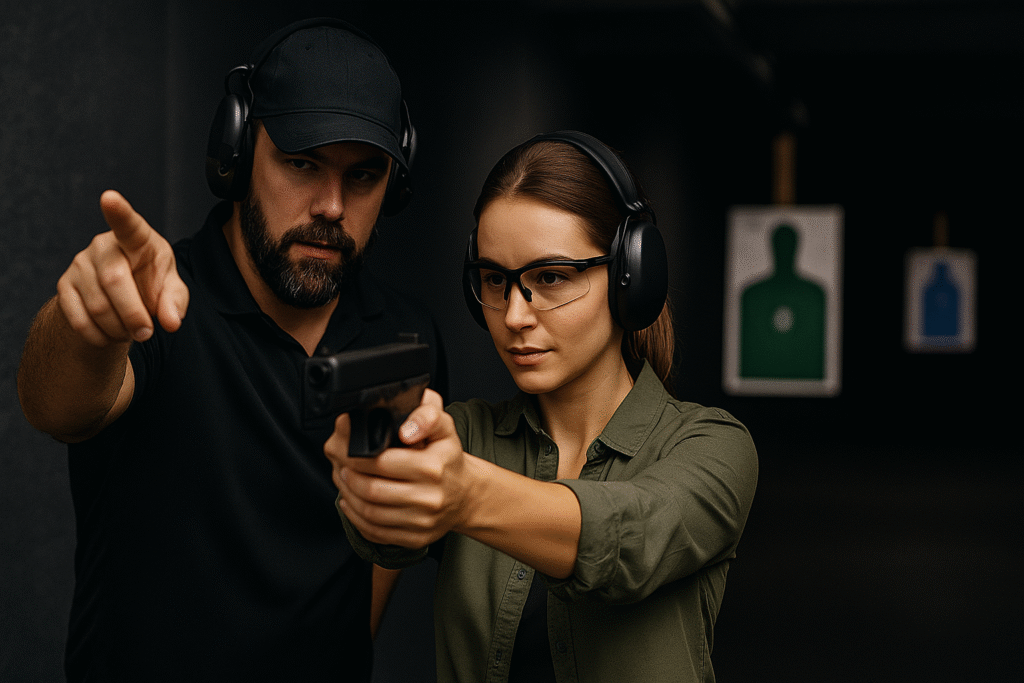
FIRST: GET REAL TRAINING
Not Instagram training.
Not YouTube training.
Not “my buddy has been shooting for 20 years” training.
And definitely not choosing an instructor because he has 200,000 followers, a beard, a plate carrier and slow-motion shooting videos.
FOLLOWERS ARE NOT CREDENTIALS.
Popularity is marketing.
It is not professional qualification.
Before paying someone to teach you how to use a deadly weapon, ask questions.
Who trained them?
What licenses or professional credentials do they hold?
Are those credentials current?
What exactly does their certification mean?
Are they insured?
What is their actual instructional experience?
When your state regulates or licenses the type of instruction being provided, verify it.
A certificate is not automatically a license.
A tactical résumé is not oversight.
A social-media following is not accountability.
You should investigate your firearms instructor harder than you investigate which optic to buy.
THEN LEARN THE LAW
This is where many gun owners become dangerously overconfident.
They know how to load the firearm.
They know how to carry it.
They watched three videos about self-defense.
Now they believe they understand deadly-force law.
That is a terrible strategy.
Learn your state and local laws.
Understand where you can carry.
Where you cannot.
How firearms must be transported or stored.
When deadly force may be legally justified.
What happens after a defensive shooting.
What changes when you cross state lines.
And understand this:
“I WAS SCARED” IS NOT A COMPLETE LEGAL DEFENSE.
The firearm does not give you authority to solve arguments.
It does not make you law enforcement.
It does not give you permission to escalate stupidity.
And it does not erase poor judgment.
If you carry a firearm, you should know the law governing that firearm.
Period.
PRACTICE—BUT STOP CONFUSING AMMUNITION WITH TRAINING
Going to the range and dumping 300 rounds into paper does not automatically make you better.
Sometimes you are simply spending money reinforcing bad habits.
Training teaches.
Practice reinforces.
You need both.
Practice safe handling.
Grip.
Trigger control.
Sight management.
Reloads.
Malfunction management.
Target identification.
Decision-making.
And whatever skills are appropriate to your lawful needs and level of training.
Practice with standards.
Practice with purpose.
Measure improvement.
ROUND COUNT IS NOT A MEASURE OF COMPETENCE.
SECURE THE DAMN GUN
If unauthorized people can access your firearm, you have a problem.
Children.
Visitors.
Untrained family members.
Prohibited persons.
Anyone who should not have access.
Responsible firearms ownership does not end when you leave the range.
It continues at home.
In your vehicle.
While traveling.
While sleeping.
While storing the firearm.
Security is part of ownership.
AND HERE IS THE PART THE INDUSTRY DOESN’T LIKE TALKING ABOUT: LIABILITY
Every bullet you fire belongs to you.
There is no recall button.
No reset.
No “I didn’t mean to.”
When something goes wrong, people may examine:
What you did.
Why you did it.
What you knew.
What you were trained to do.
Whether your actions were reasonable.
Whether your handling was safe.
Whether the outcome could have been prevented.
That is why training matters.
That is why legal education matters.
That is why instructor quality matters.
This is not about looking tactical.
This is about consequences.
BUYING THE GUN WAS THE EASY PART
The harder part is becoming the type of person who can responsibly own, carry and potentially use it.
So after you buy your first firearm:
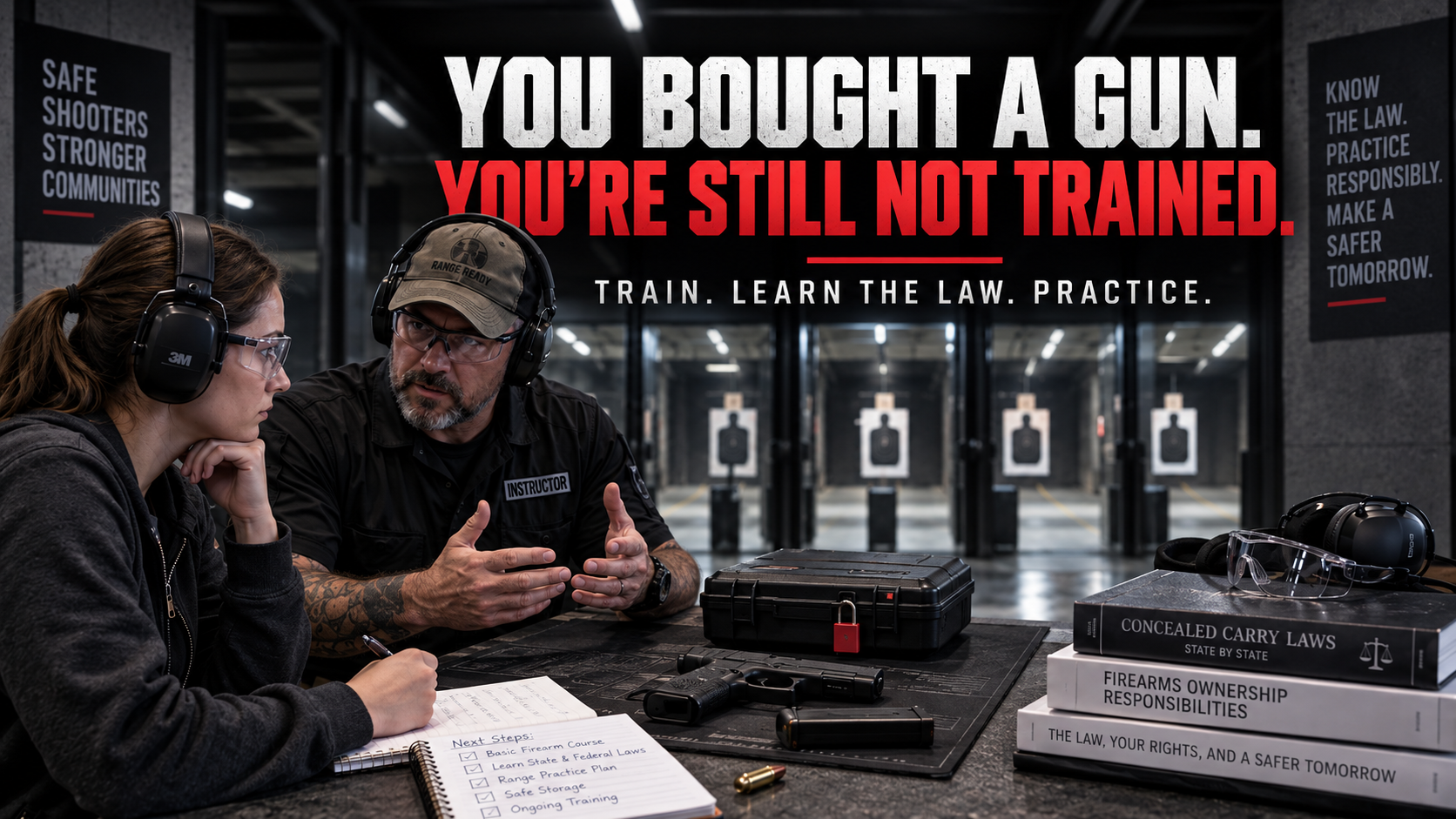
GET TRAINED.
VERIFY YOUR INSTRUCTOR.
LEARN THE LAW.
SECURE THE FIREARM.
PRACTICE WITH PURPOSE.
KEEP LEARNING.
Because a gun purchase gives you ownership.
It does not give you competence.
It does not give you judgment.
And it does not give you immunity from consequences.
YOU BOUGHT A GUN.
CONGRATULATIONS.
NOW EARN THE RESPONSIBILITY THAT COMES WITH IT.
Train Often. Train Smart. Train Proudly.
This article is for general educational purposes and is not legal advice. Firearms, carry, transportation, storage and use-of-force laws vary by jurisdiction and may change. Verify current law through official sources and consult qualified legal counsel when appropriate.